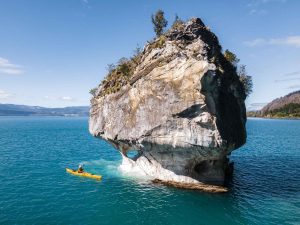
In the heart of Chilean Patagonia lie the Marble Chapels, caverns that seem to be from another world.
Considered a must-see on the Carretera Austral, these marble formations have been sculpted over millennia in Lake General Carrera. One of their great attractions is the variety of colors inside, which change depending on the time of day.
And as unusual as it may seem, this natural treasure hides an unexpected geological connection to Ancient Greece, as they share a similar geological origin.
The Connection Between the Marble Chapels and Ancient Greece
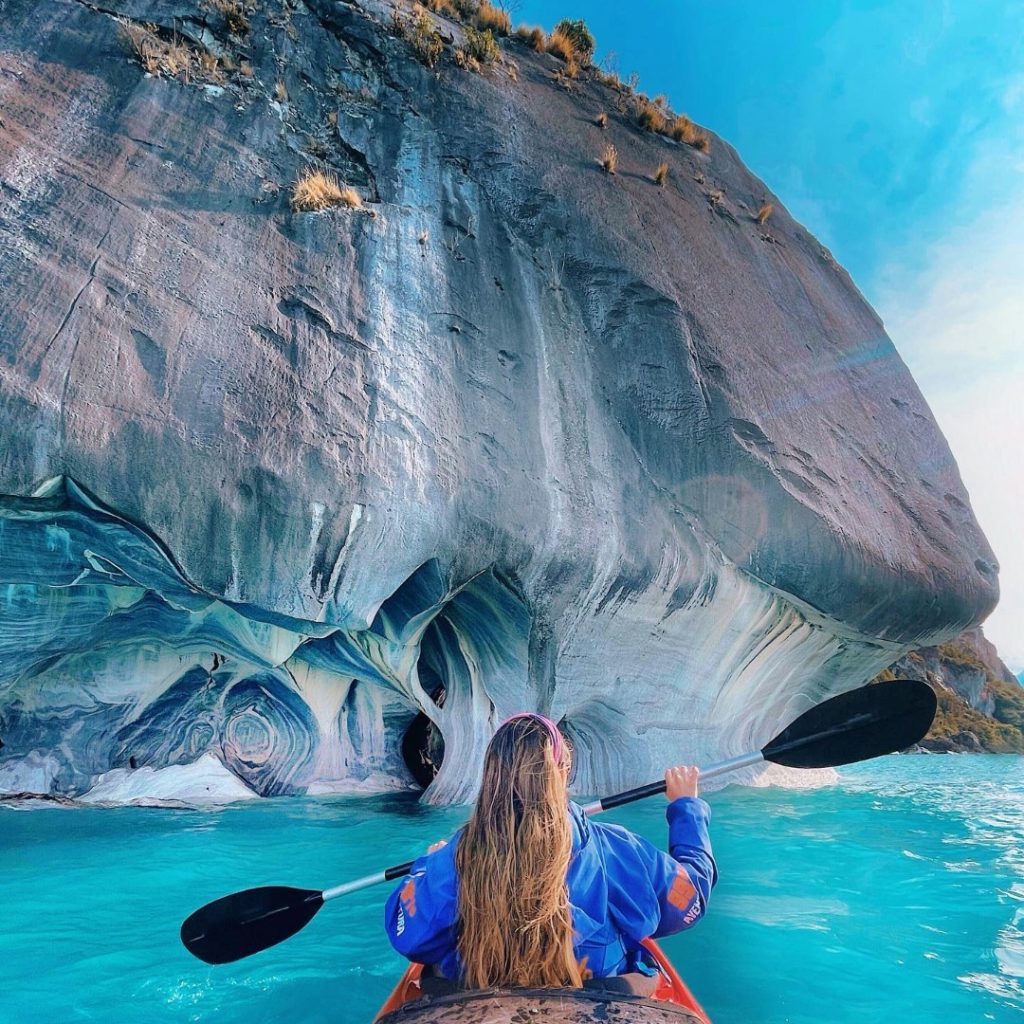
There is a fascinating and little-known link connecting this corner of Patagonia with the cradle of Western civilization. The material that makes up the Marble Chapels belongs to the same geological family as the famous marbles used in Ancient Greece to sculpt iconic temples like the Parthenon and classical statues: both are marble, a metamorphic rock formed from the transformation of ancient limestones under intense heat and pressure deep within the Earth.
However, although they share the same geological process, they do not share the same era. The marble of the Chapels was formed about 300 million years ago, during the Upper Paleozoic. In contrast, Greek Pentelic marble has a much more recent origin: its original rock became marble 20 to 70 million years ago, when the African plate began to subduct under the European one.
That is, long before the Greeks carved their history, nature in Chile was sculpting its own floating masterpiece.
A Sanctuary That Never Looks the Same Twice
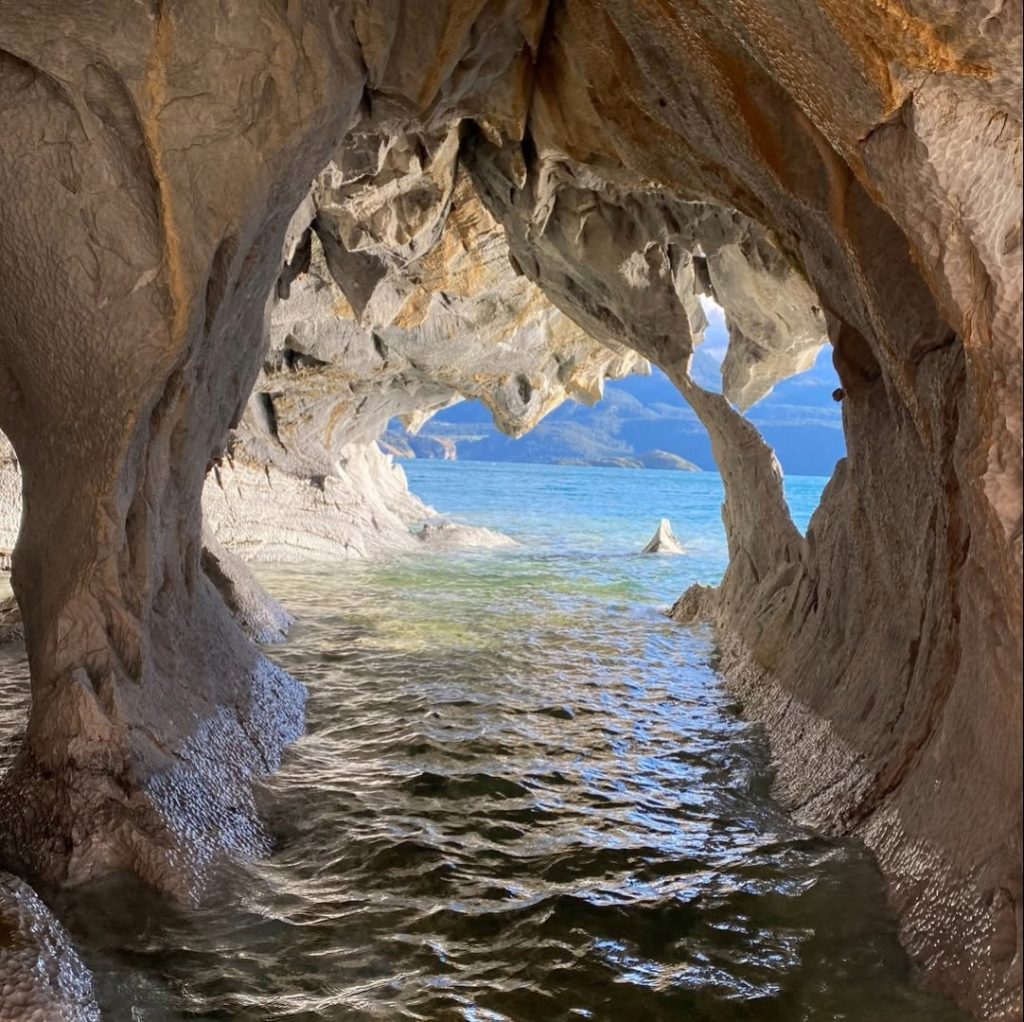
It is unlikely that the Marble Chapels look the same on every visit. Their bluish, turquoise, white, and grayish tones constantly change depending on the sun’s position, the time of day, the water level of Lake General Carrera, and the amount of glacial sediments suspended in its waters.
During spring and summer, when snowmelt feeds the lake, the water acquires an intense turquoise color that reflects on the marble walls, creating spectacular postcards.
Due to its extraordinary geological, scientific, and scenic value, the site was declared a Nature Sanctuary in 1994. Although the destination is globally known as the Marble Chapels, it is composed of three main formations: the Marble Cathedral, the Marble Chapel, and the Marble Caverns.
How to Get to the Marble Chapels?
The main access point to the Marble Chapels is the town of Puerto Río Tranquilo, located about 223 kilometers south of Coyhaique, the capital of the Aysén Region. You can arrive by plane, landing at Balmaceda Airfield.
To explore this natural sanctuary, you can choose between two types of excursions, coordinated from Puerto Río Tranquilo according to your travel style:
- Boat Excursion: This is the most comfortable, fastest, and suitable option for all ages, ideal for families. The tour lasts approximately two hours and is conducted in open boats with capacity for 6 or 12 passengers. This option offers an excellent panoramic view (from USD $38/$25,000 CLP approximately).
- Kayak Excursion: A quieter, more immersive experience in contact with nature, where you will first be transferred to Bahía Mansa before starting the experience. It requires moderate physical condition to paddle for a total journey of two to three hours (with about 20 minutes of initial navigation to the formations). Thanks to its size, it allows you to enter narrower tunnels, low-height caves, and small crevices.
In Puerto Río Tranquilo you will find a variety of accommodations, including cabins, hostels, and eco-lodges. You can also stay in Coyhaique and travel to the Marble Chapels via a tour.
To avoid scams or other inconveniences, it is essential that you choose services registered with the National Tourism Service (Sernatur). You can find the list here.
What is the Best Time to Visit the Marble Chapels?
The Marble Chapels can be visited year-round, although the most popular season is between November and March, when weather conditions are more stable and days are longer. If your goal is to enter the caverns, spring and autumn usually offer the best conditions. During this time, the water level of Lake General Carrera is lower. In summer, snowmelt raises the water level, and it is not always possible to access the interior of the formations.