Have you ever wondered why Patagonia is called Patagonia? A common question we’ll try to answer here.
There are different theories, from literary origins to the size of feet. Though with one milestone as a starting point: Ferdinand Magellan’s 1520 expedition.
Why is Patagonia called Patagonia?
The best-known theory about why Patagonia is called Patagonia points to the chivalric novel Primaleón, very popular during the 16th century. In that book appeared a wild and gigantic character named Patagón.

When Ferdinand Magellan and his crew arrived in southern South America, they encountered indigenous peoples of great stature (1.80 meters), ancestors of the Tehuelche. For Europeans of the time, whose average height was 1.60 meters, this must have been surprising.
According to historians, the navigators would have associated that image with the literary character and began calling the inhabitants of the area “patagones.” Over time, the immense southern territory became known as Patagonia.
Big feet or fictional characters?
Another popular explanation holds that Patagonia could derive from “patones,” meaning people with big feet. According to this version, the footprints were not due to the natural size of the inhabitants’ feet, but to the use of footwear made with thick layers of leather and guanaco hide, which made the tracks look much wider and rougher than normal.
Although today it’s considered more a folk etymology than a linguistic fact, the image of the “patagones” with giant feet remained forever etched in the collective imagination.
Three unmissable destinations in Chilean Patagonia
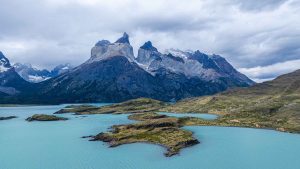
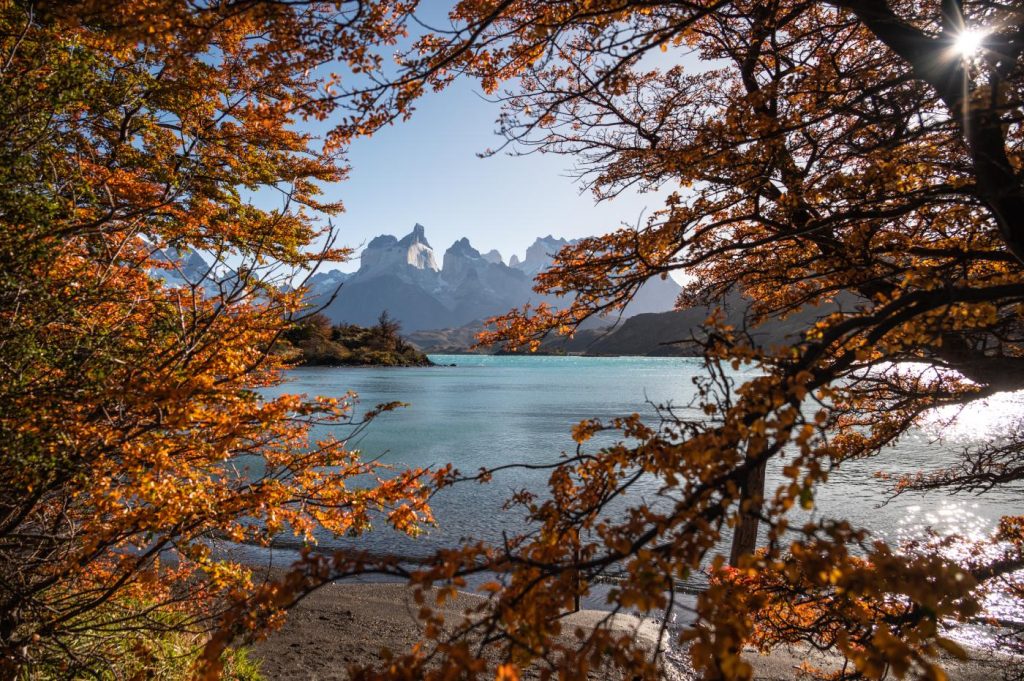
Beyond the theories, the truth is that the name seems tailor-made for this territory. Those who visit Chile’s southern region discover colossal mountains, ancient glaciers, turquoise lakes, and forests where nature dominates every scene.
Today, the true “giants” of our country’s southernmost region are not legendary characters. They are its geographical landmarks.
1. Torres del Paine: the icon of Chile’s far south
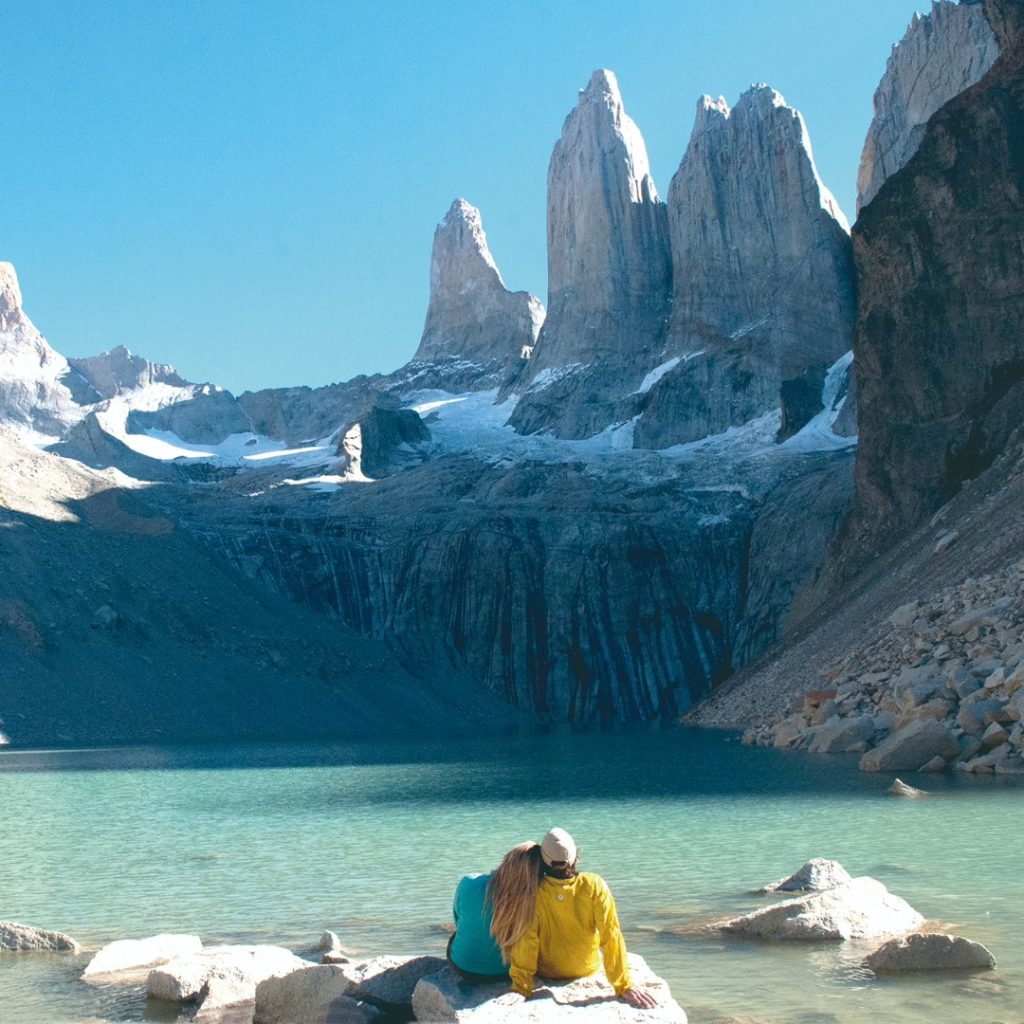
Torres del Paine National Park is one of South America’s most recognized postcards. Its granite towers, epic trails, and wildlife make it an essential stop for trekking and photography lovers. The W and O routes rank among the most famous hikes on the planet, while guanacos, condors, and pumas inhabit this beautiful setting.
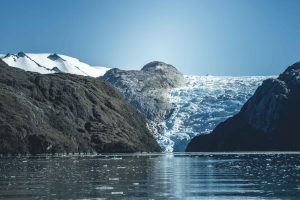
2. Grey Glacier and the Southern Ice Fields
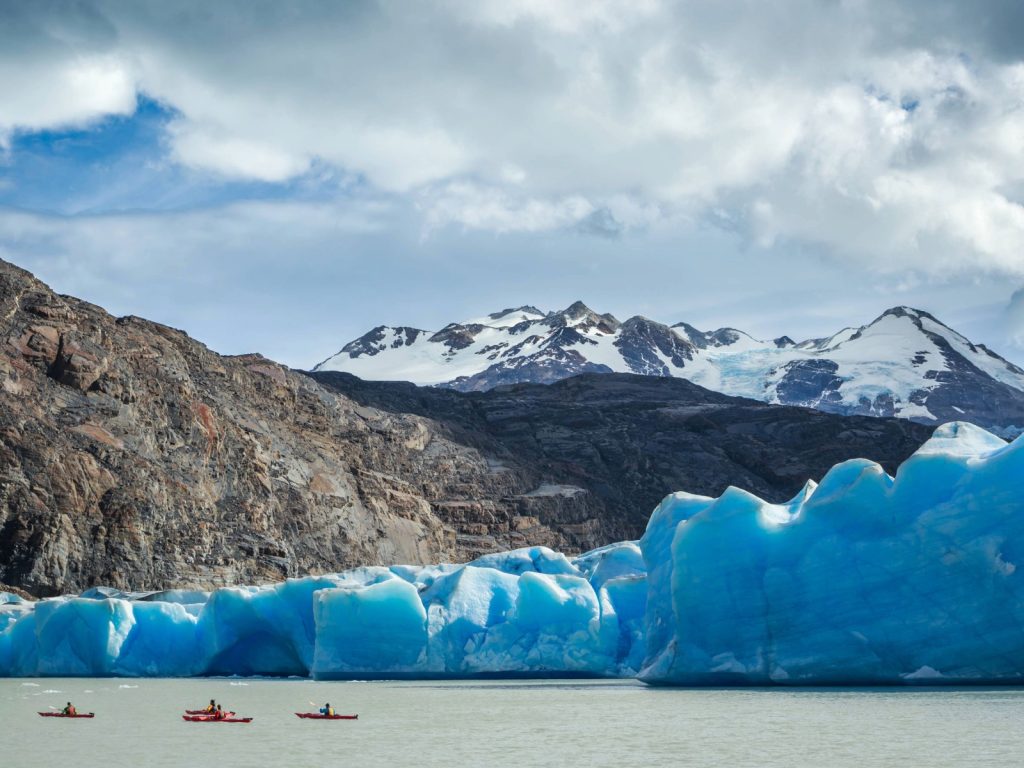
Grey Glacier offers one of the most striking experiences in Chilean Patagonia. You can navigate among bluish icebergs, contemplate up close its walls up to 30 meters high, or walk on this ice mass with specialized guides. It’s part of the Southern Ice Fields, one of the world’s largest freshwater reserves.
3. Tierra del Fuego: the southern adventure
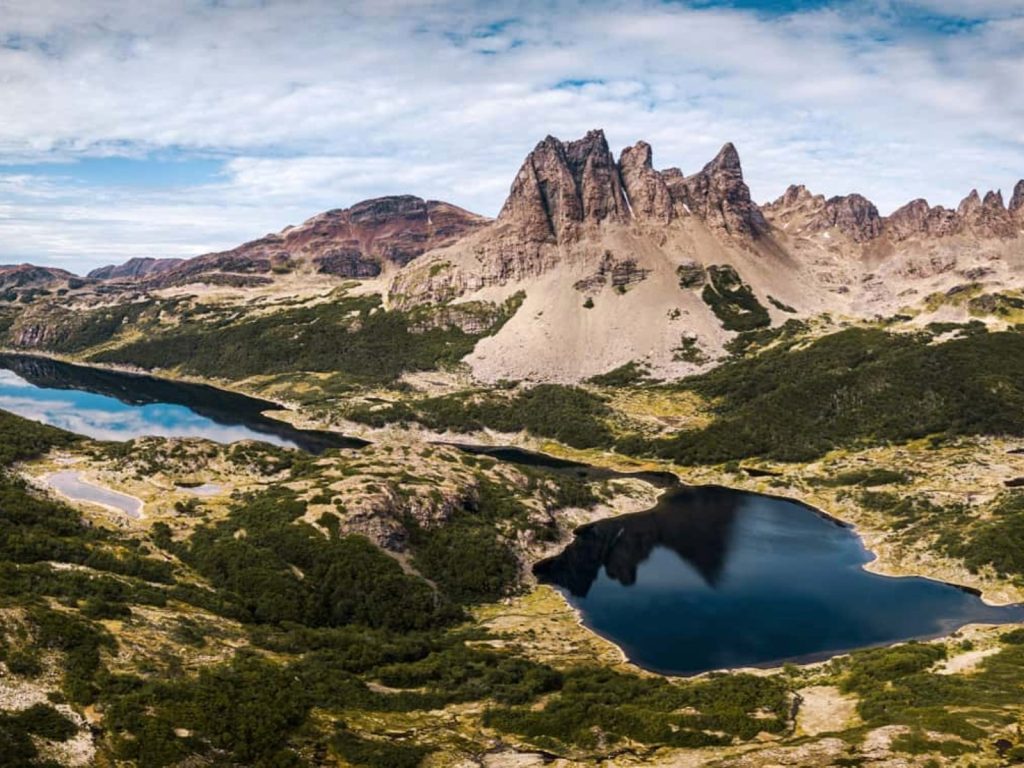
Crossing the Strait of Magellan you reach Isla Grande de Tierra del Fuego, a territory of pampas and routes where silence is only interrupted by the wind. From here it’s possible to connect with Navarino Island and its capital Puerto Williams, the world’s southernmost city, and explore circuits like the Dientes de Navarino, one of the continent’s most spectacular and extreme trekking journeys. It’s an ideal place for those seeking the true silence of the Earth.