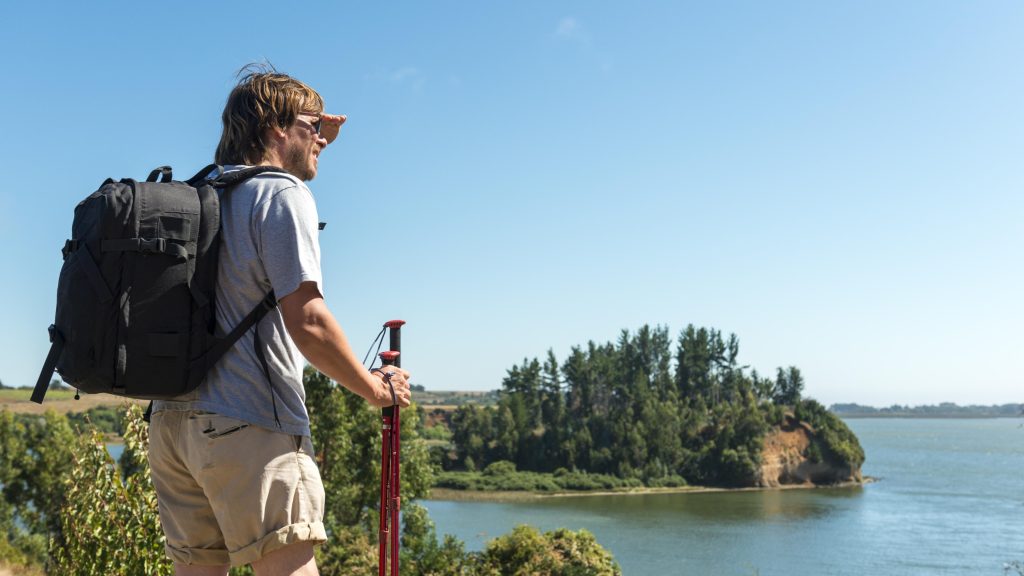
Praised worldwide, Chile has the most pristine, clear, and clean skies on the planet for observing the cosmos and unraveling the mysteries of the universe.
Our country has more than 300 clear nights a year, which, combined with Atacama’s dry air and the desert’s zero light pollution, makes high-definition astrotourism possible. It’s no coincidence that we host 40% of the world’s astronomical observation infrastructure, and that figure is expected to reach 60% in the coming years.
Whether you’re a passionate astronomer or simply want to look up at the sky and feel small in the face of the universe, our country awaits you with the following experiences.
The best observatories in the world
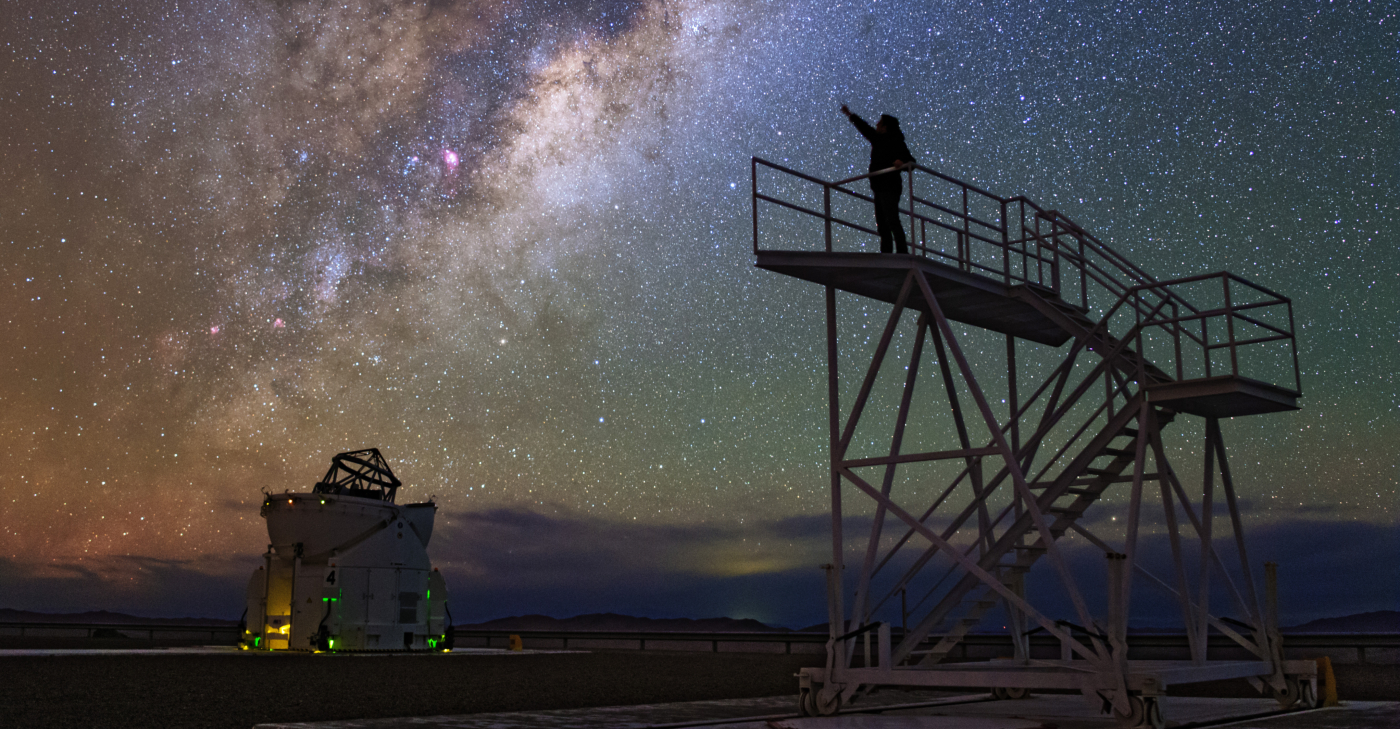
Chile doesn’t just look at the sky—it leads it. The country is home to some of the most important observatories in the history of astronomy, including the Paranal Observatory, home of the VLT (Very Large Telescope), considered the most advanced optical observatory in the world; and the ALMA radio telescope (Atacama Large Millimeter Array), which has revolutionized our understanding of the cosmos.
In the future, it will be joined by the ELT (Extremely Large Telescope), currently under construction at Paranal, which, once inaugurated, will make Chile the world’s largest optical astronomy hub.
The magic of the Elqui Valley
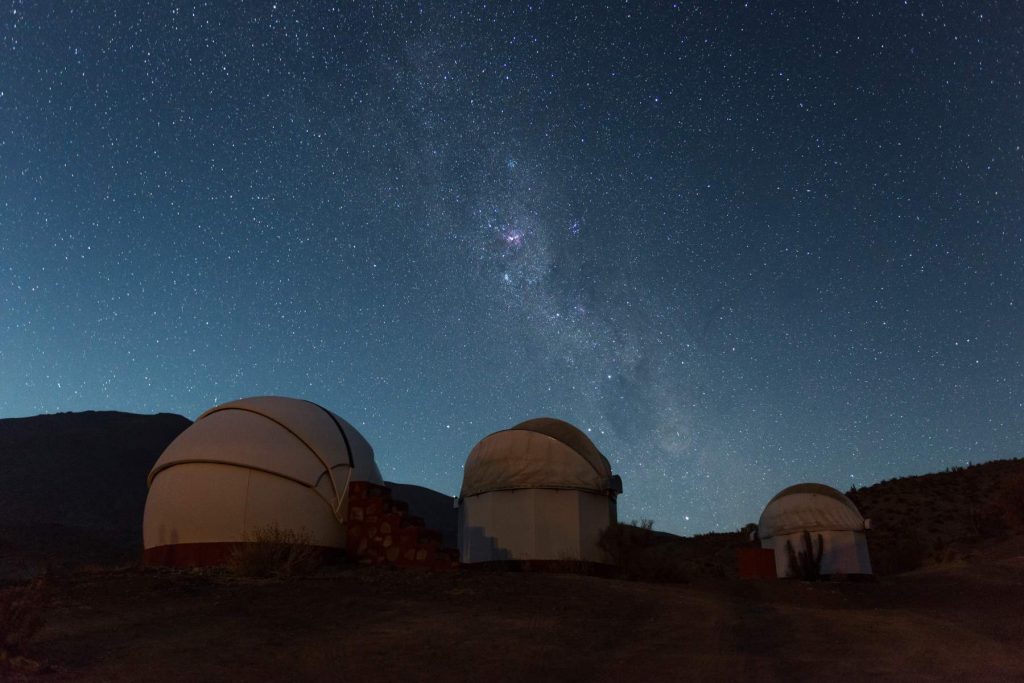
In the Coquimbo Region, known as Chile’s “Star Capital,” the night sky takes on a whole new dimension. The Elqui Valley is home to an unmatched astronomical route, including the Cerro Tololo Observatory, part of the Inter-American Observatory; the Gemini Observatory, which opens its doors every Friday of the year; and the La Silla Observatory, almost on the border with the Atacama Region, with visits available every Saturday.
Meanwhile, northwest of Vicuña is the pioneer of astrotourism: the Mamalluca Observatory. The tour at this giant of astrotourism in Chile includes transfers, an introductory talk, naked-eye observation, and viewing through both large and small telescopes.
Also worth adding is the Collowara Observatory, located near Andacollo, one of the country’s most modern tourism research centers. It has different telescopes, as well as conference rooms with audiovisual material.
San Pedro de Atacama: Ancient and sustainable astronomy
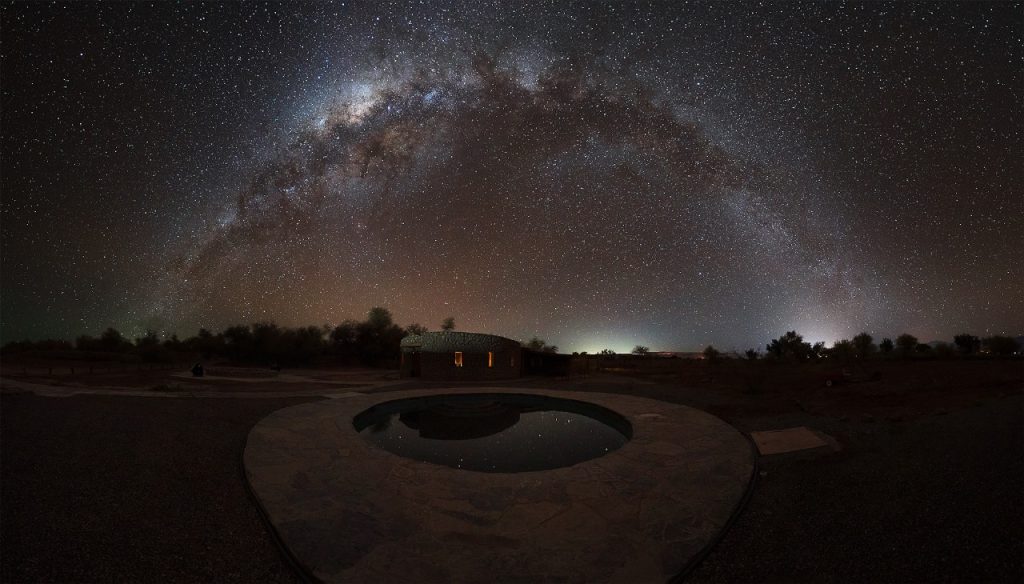
In San Pedro de Atacama, you’ll find night excursions to places like Ayllu de Solor, the Cordillera de la Sal, or observatories on the outskirts of town, where light pollution is minimal. On these trips, you can admire southern hemisphere constellations such as the iconic Southern Cross, Centaurus, Scorpius, and the fascinating Magellanic Clouds.
Among these experiences is IOcrux, focused on the Andean worldview. Here you can observe celestial bodies invisible to the human eye through powerful 16” telescopes, as well as relive ancestral practices by observing space through a mirror of water. You can find more information on their official website.
Astrotourism at the Hand of the Desert
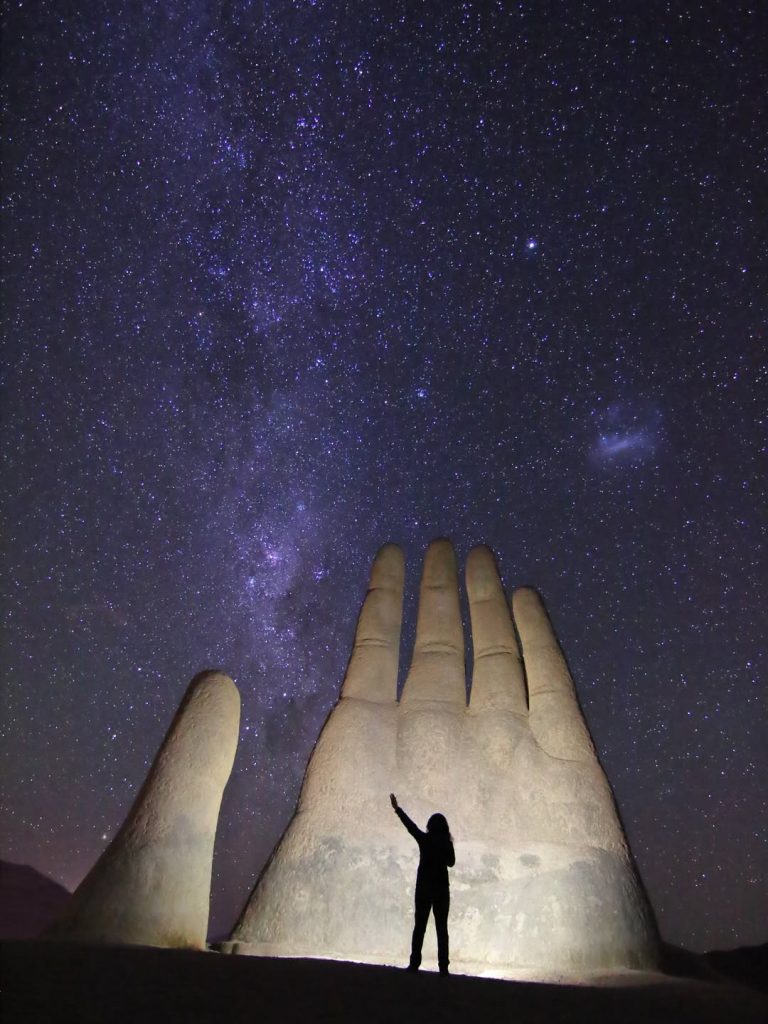
In the vastness of the Atacama Desert, more than 1,100 meters above sea level and 45 kilometers south of Antofagasta, a colossal sculpture rises from the earth: the Hand of the Desert, by Chilean artist Mario Irarrázabal. It’s a concrete human hand reaching up toward the sky as if trying to touch the stars.
At night, with the Atacama sky stretching out above it, it becomes one of the world’s most surreal and photogenic astronomical settings. Visiting at sunset, when the Milky Way begins to trace itself along the horizon, is an experience that captures everything that makes Chilean astrotourism unique: science, art, culture, and cosmos all in one place.
Observatories near Santiago
Santiago is also part of Chile’s astrotourism route and offers interesting initiatives to discover the secrets hidden among the stars, such as the Andean Astronomical Observatory.
In Cajón del Maipo you’ll find the Roan Jasé Observatory, which offers astronomical tours and daytime (solar) and nighttime observation with telescopes of different sizes. The tour blends classical astronomy with elements of the Mapuche worldview.
Meanwhile, in the Aconcagua Valley, you’ll find the Pocuro Astronomical Observatory, which has the largest telescope in the region, donated by the University of Bochum and the La Silla Observatory.