Glaciers and geysers, austral winds and starry skies. Combining Chile’s two extremes is possible, even though there are more than 3,300 kilometers between both destinations.
Before embarking on your trip, it is advisable to know the air route, the minimum time you will need, and what to pack.
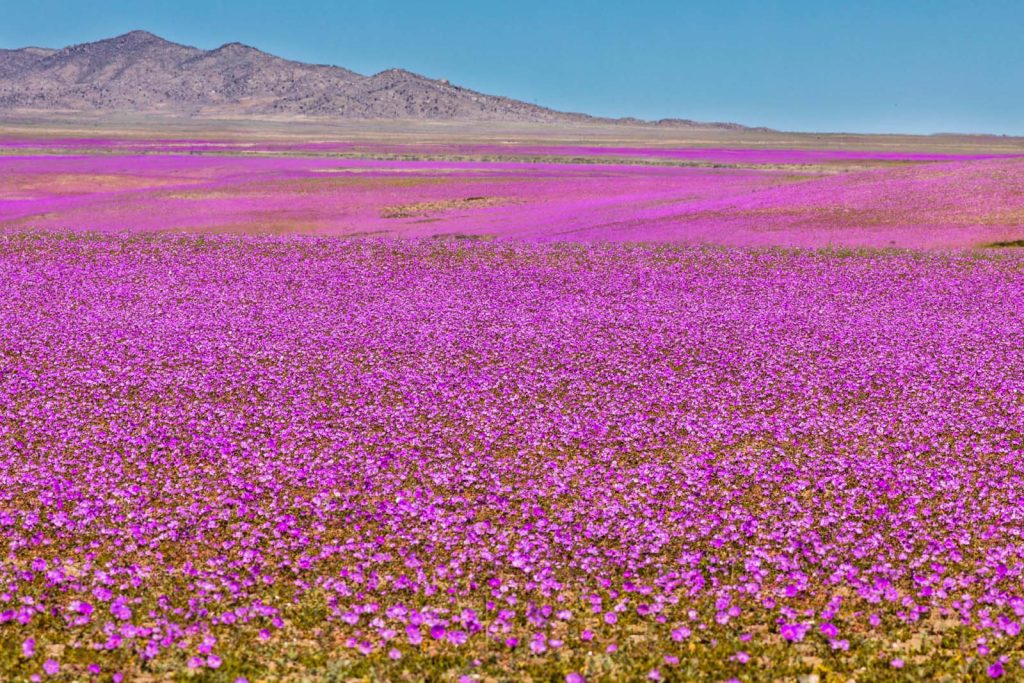
Traveling from Patagonia to the Atacama Desert—the driest in the world—allows you to discover completely opposite landscapes in a single adventure. The key is to consider the distances and reserve at least 12 days to enjoy destinations such as San Pedro de Atacama, Coyhaique, or Torres del Paine, without turning the journey into a succession of transfers.
How to Travel from Patagonia to the Atacama Desert?
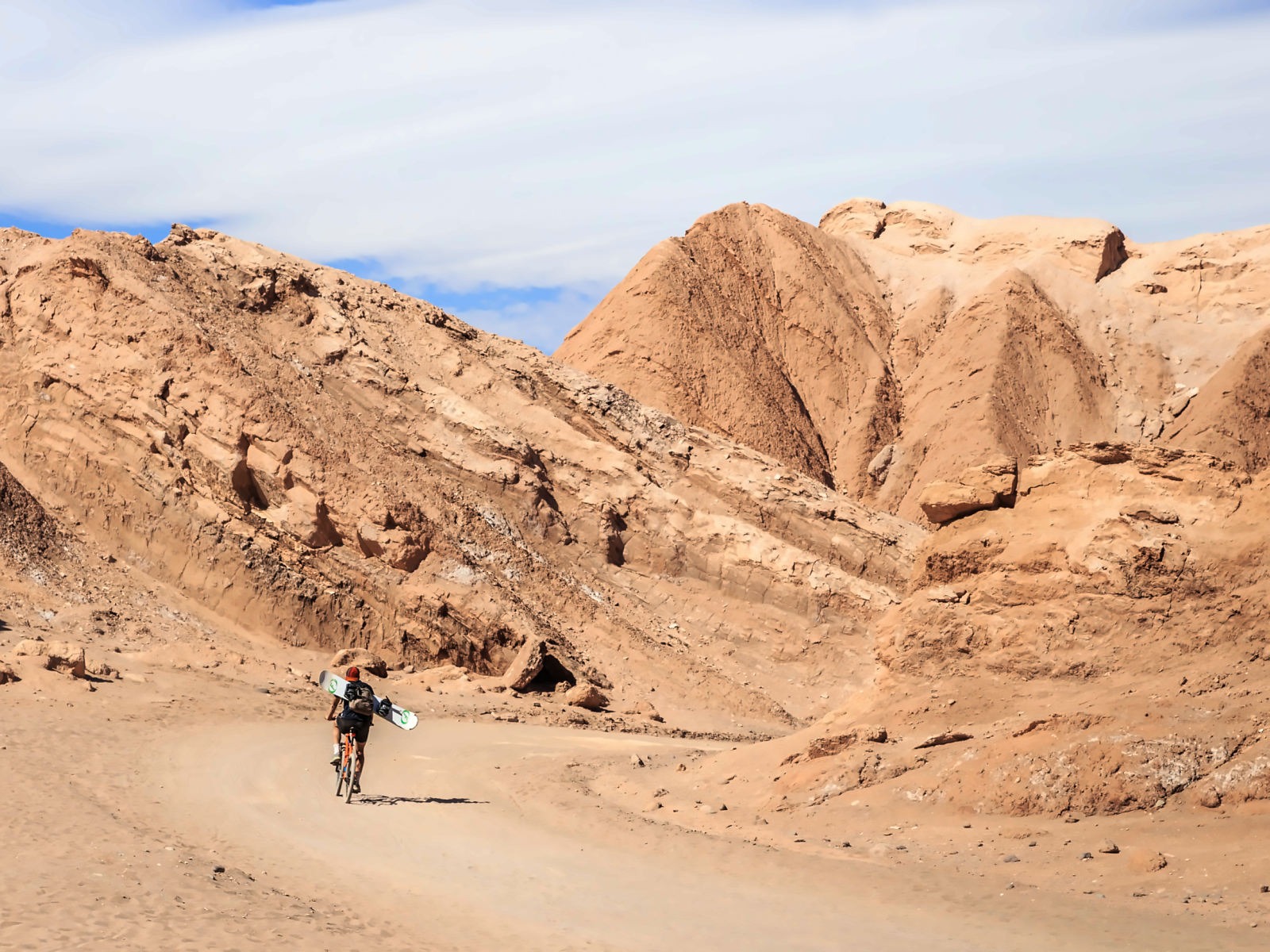
The fastest way to connect Chilean Patagonia with the Atacama Desert is by plane. Santiago is the main connection point between northern and southern Chile, so you will have to pass through the capital before continuing to Calama, the closest airport to San Pedro de Atacama.
The route will depend on where you finish your tour of Patagonia:
- If you are in Puerto Montt: the flight from El Tepual Airport to Santiago takes about 1 hour and 45 minutes.
- If you are in Coyhaique: first you must reach Balmaceda Airfield, about 55 kilometers from the city. The flight to Santiago takes about 2 hours and 20 minutes.
- If you are in Punta Arenas: the flight to Santiago takes around 3 hours and 25 minutes.
- If you are coming from Torres del Paine: during high season, there are direct flights from Puerto Natales to Santiago, lasting just over 3 hours. The rest of the year, continue by land for about 3 hours to Punta Arenas and fly from there.
Once in Calama, you will still have to travel about 100 kilometers by road to San Pedro de Atacama. Antofagasta and Iquique also have flights from Santiago, but they are considerably further from San Pedro.
Travel times depend on available schedules and waiting times between flights. Therefore, even if the journey seems simple, it is advisable to reserve a good part of a day to complete the transfer.
Can the journey be done by road?
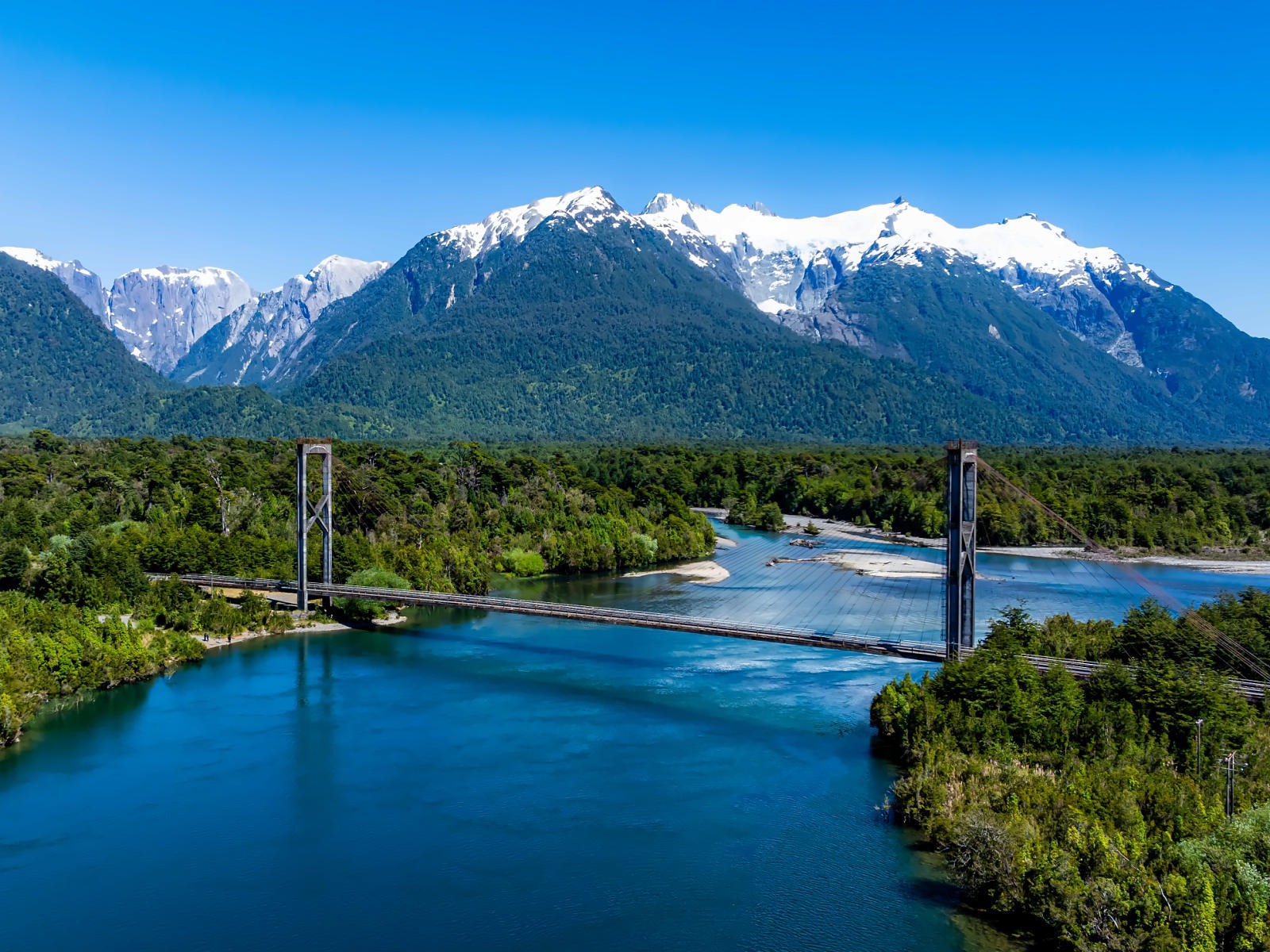
Yes, although you will need considerably more time. From Coyhaique to San Pedro, there are more than 3,000 kilometers across the Carretera Austral, ferries, and Route 5.
From Punta Arenas, the challenge grows, because by land you have to cross into Argentina or add navigations through the fjords.
If you want to do a road trip connecting Patagonia with the Atacama Desert, consider at least three weeks and keep in mind that you will spend a good part of the trip on the road.
How to Organize 12 Days Between Patagonia and Atacama?
A good formula is to dedicate five days to Patagonia, one day for the transfer, and six days to San Pedro de Atacama. For the five days in Patagonia, you can choose between two experiences:
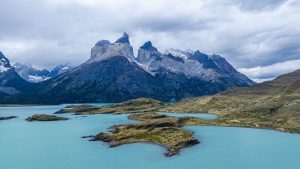
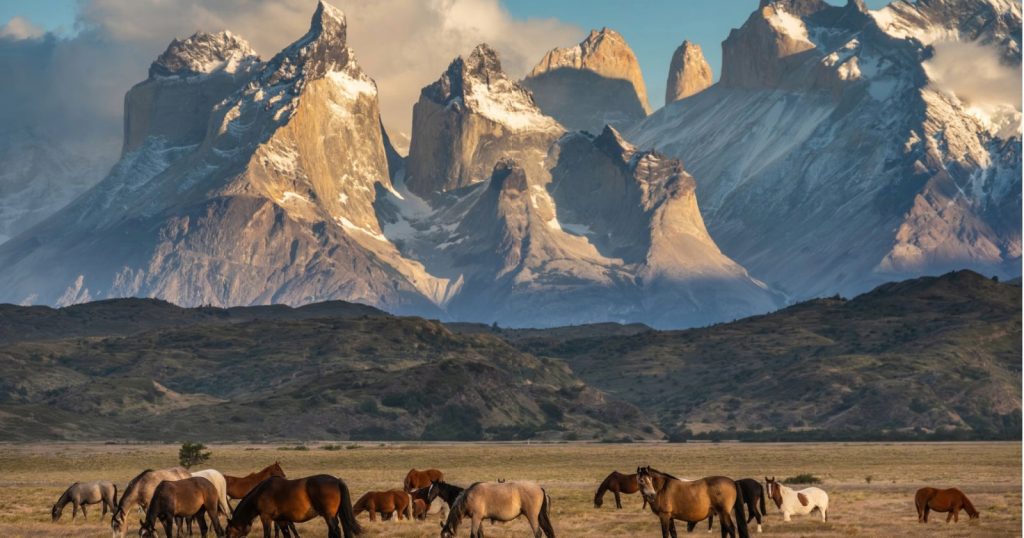
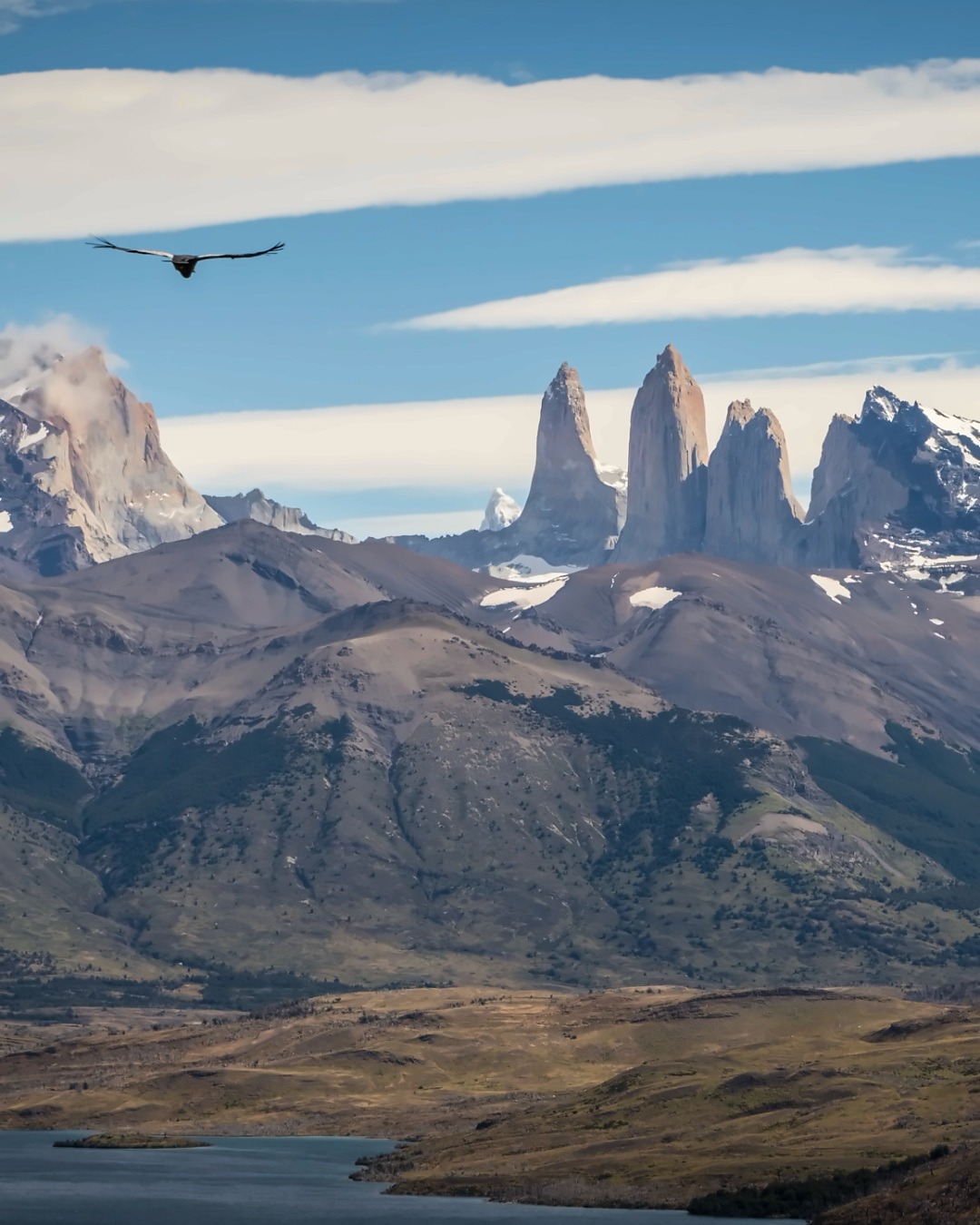
- Torres del Paine: reserve four or five days to explore the park. If you are looking for trekking, the W Circuit takes between four and six days and allows you to visit Base Torres, the French Valley, and Grey Glacier.
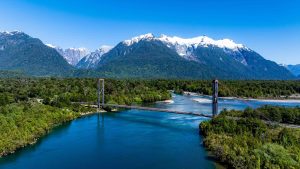
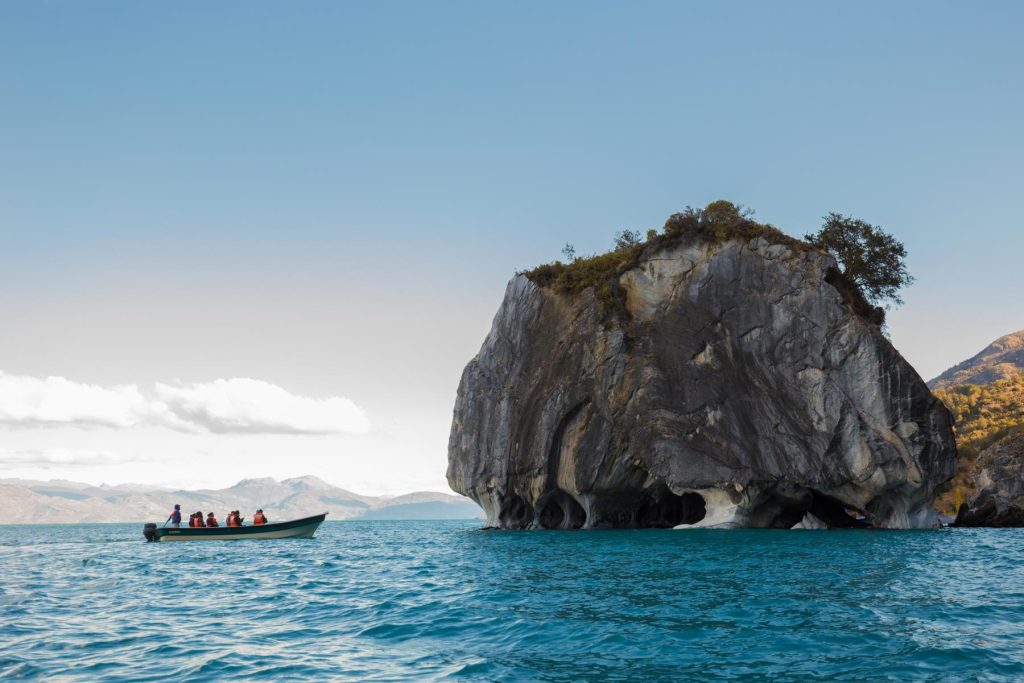
- Coyhaique: dedicate a couple of days to explore its surroundings and reserve another two to reach Puerto Río Tranquilo, navigate Lake General Carrera, and visit the Marble Chapels. Another alternative is a full-day excursion to Laguna San Rafael.
Once in northern Chile, you can organize the six days in San Pedro de Atacama in this way:
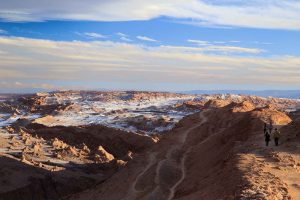
- Moon Valley and Death Valley: reserve one day to explore these desert landscapes and discover some of the most characteristic rock formations in the area.
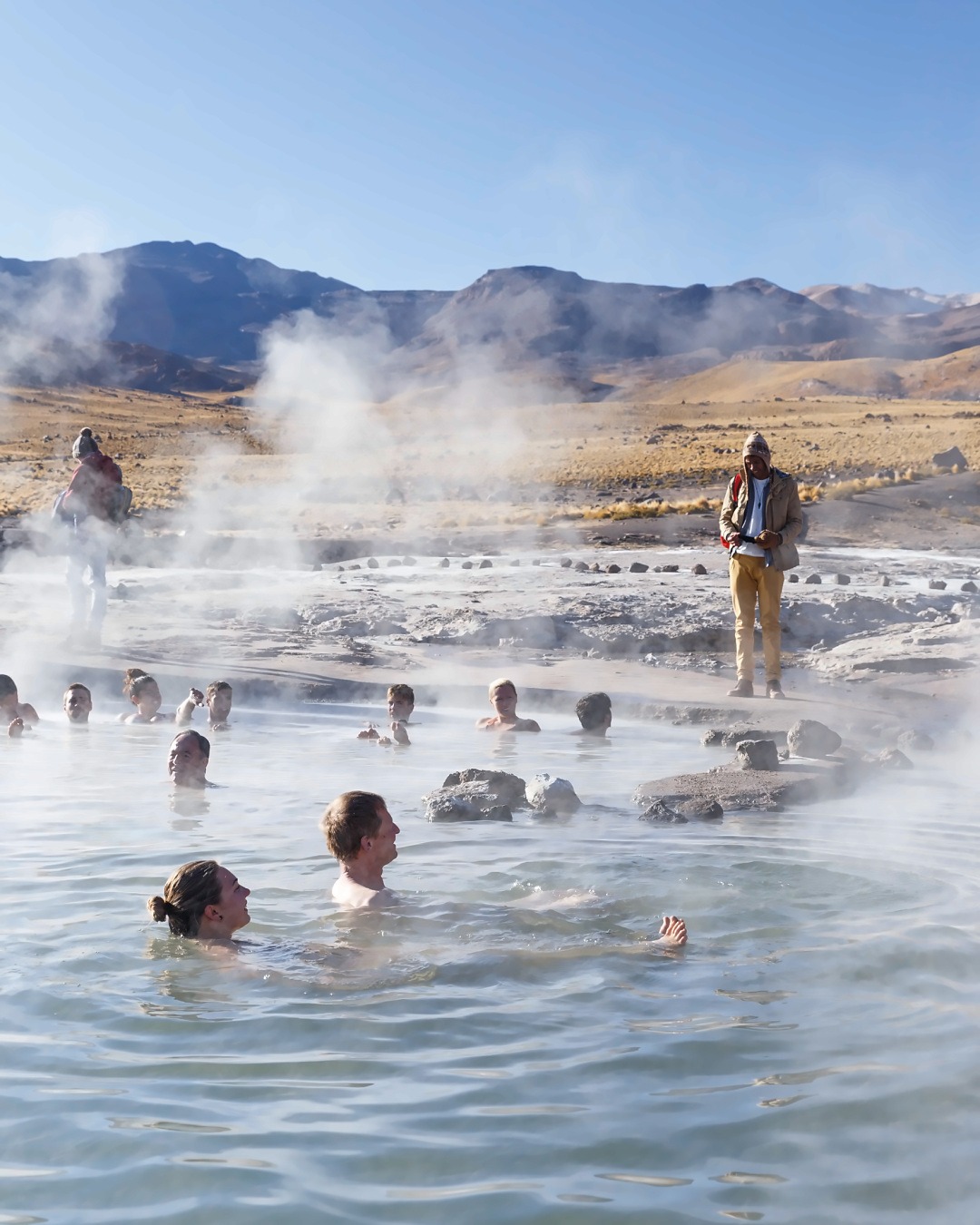
- El Tatio Geysers, high-altitude lagoons, and salt flats: dedicate two days to explore the high-altitude landscapes and leave another to tour San Pedro and enjoy an astrotourism experience.
Keep in mind that San Pedro is about 2,400 meters above sea level, and El Tatio Geysers exceed 4,300 meters. The altitude difference can cause altitude sickness. It is advisable to give your body time to acclimatize and start with lower elevation activities.
What Clothes to Pack for Patagonia and the Atacama Desert?
Packing can seem like one of the biggest challenges of the trip, but there is a simple solution: dressing in layers. In Patagonia, you will need protection against wind, cold, and rain, while in Atacama, it is advisable to combine light clothing for the day with warm layers for the nights and high-altitude excursions.
- Thermal base layer and a warm second layer, such as fleece or a light down jacket.
- Windproof and waterproof jacket for Patagonia and high-altitude excursions.
- Comfortable pants and trekking footwear for hiking trails and natural landscapes.
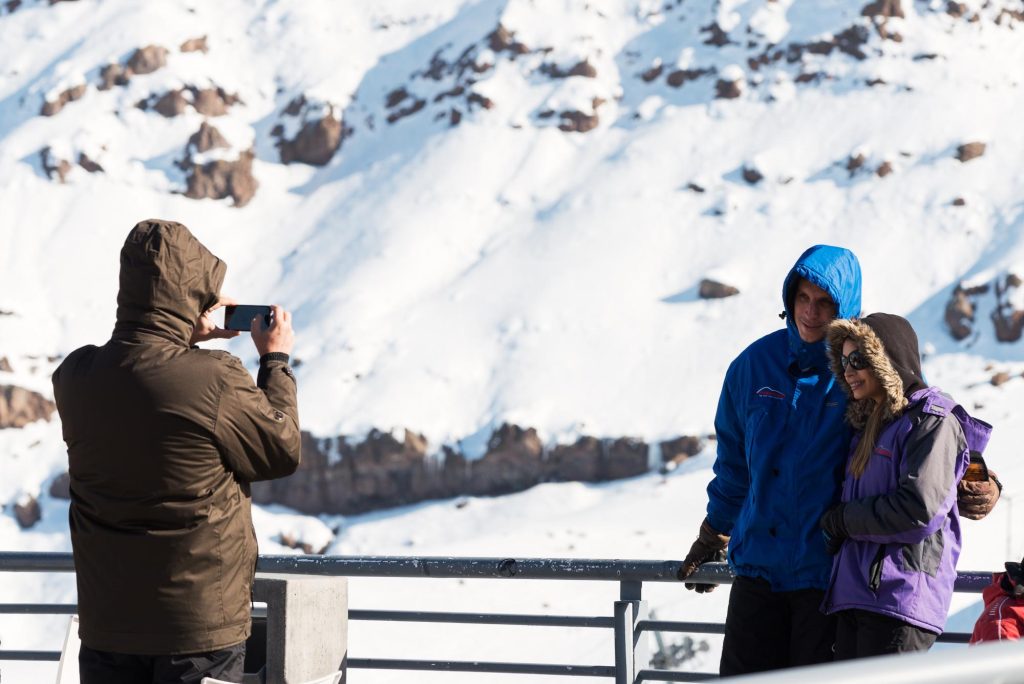
- Hat, gloves, and sunglasses, as well as sunscreen, especially for high-plateau excursions.
For warmer days in San Pedro, add light t-shirts and a hat or cap to protect yourself from the sun. If you visit the hot springs, you can also include a swimsuit.