Buried for over 1,700 years beneath the dunes of the Atacama Desert, the Tulor Village is one of Chile’s most fascinating archaeological sites.
Located just minutes from the tourist town of San Pedro de Atacama, this nearly 2,800-year-old village is considered one of the oldest settlements in northern Chile. And most fascinating: it remained hidden under the sand for centuries until its rediscovery in 1956.
Today, its trails, replica dwellings, and mud vestiges allow travelers to take a true journey into the past in the heart of the Atacama oasis.
Cover photo: National Monuments Council
What is Tulor Village and Why is it So Important?
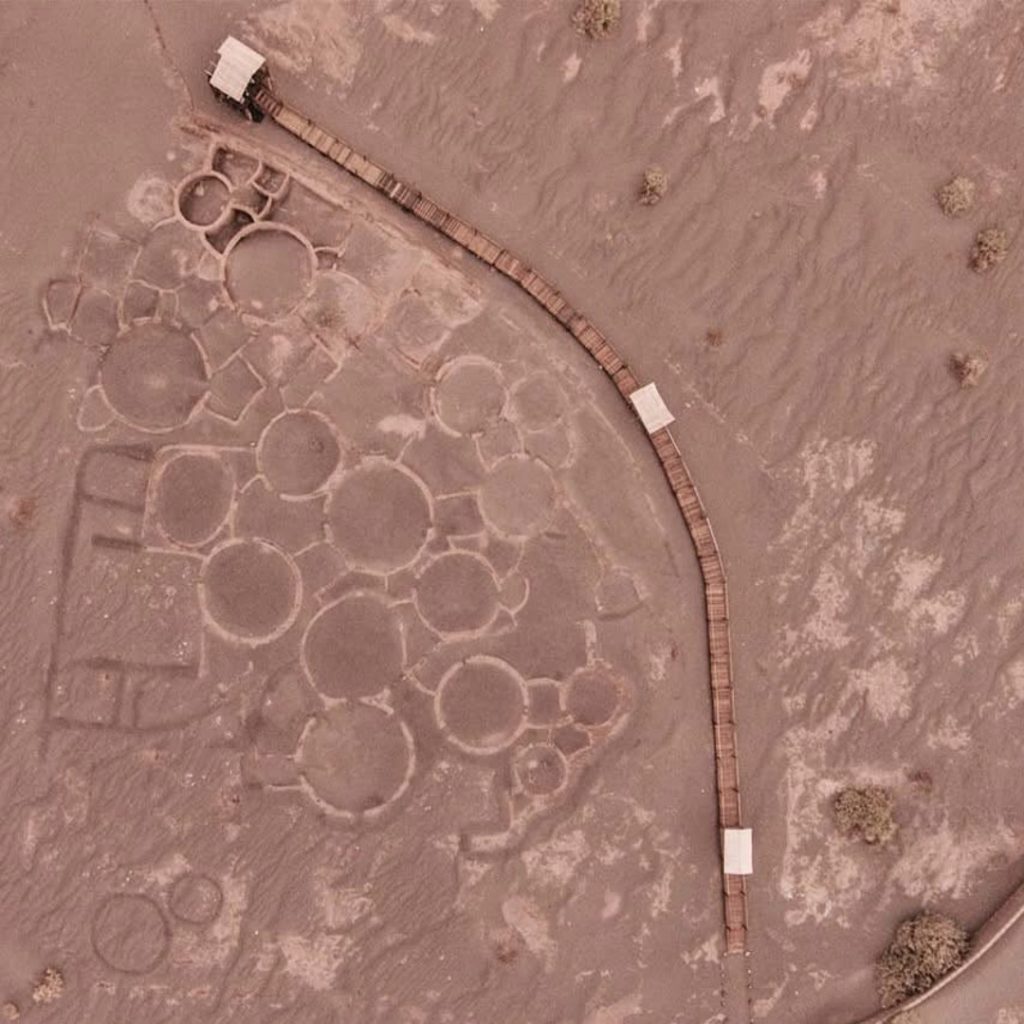
The Tulor Village appears on the northern edge of the Atacama Salt Flat, near the ancestral communities of Tulor and Coyo. Archaeological studies indicate that this settlement began to be inhabited around 400 BC. It is estimated that it was inhabited by the Atacameño people (or Lickanantay), who developed agriculture, raised llamas and alpacas, and established exchange networks with other peoples.
This place demonstrates the enormous capacity for adaptation and resilience of human societies, which managed to subsist in one of the planet’s most extreme environments.
The main core of the village was composed of approximately 30 circular enclosures interconnected by corridors, patios, and common spaces. Their curved shapes were a sophisticated adaptation to the desert environment:
- Wind resistance: the circular walls reduced the impact of the strong gusts characteristic of the Atacama Desert.
- Thermal insulation: the thick adobe walls helped maintain more stable temperatures between the hot days and cold nights of the desert.
- Sun protection: the narrow corridors reduced direct exposure to the intense Atacama sun.
A Village Hidden in the Sand
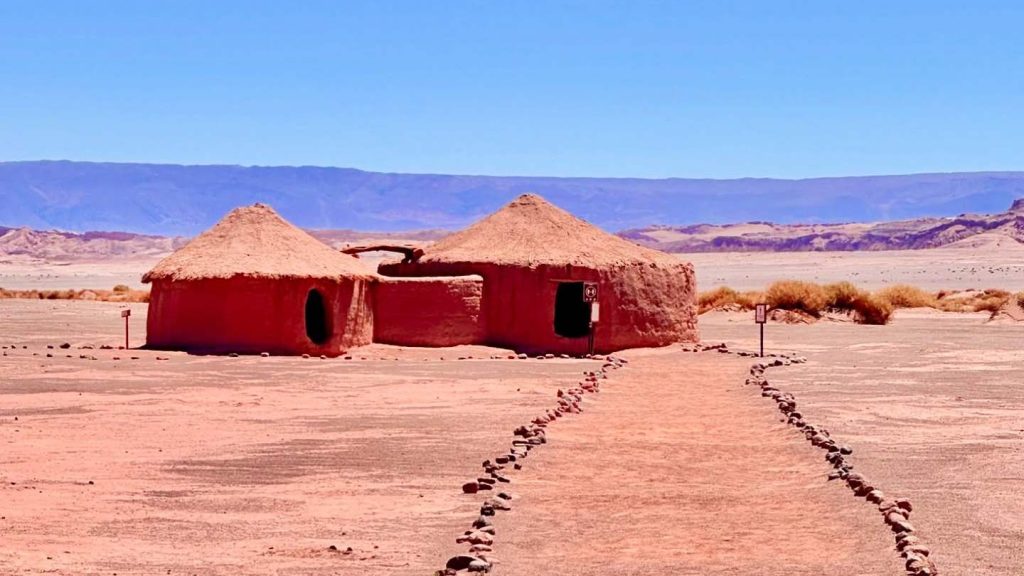
More than two thousand years ago, the landscape around Tulor was very different. The proximity of the San Pedro River created fertile areas that enabled the development of agriculture and livestock farming in the middle of the desert.
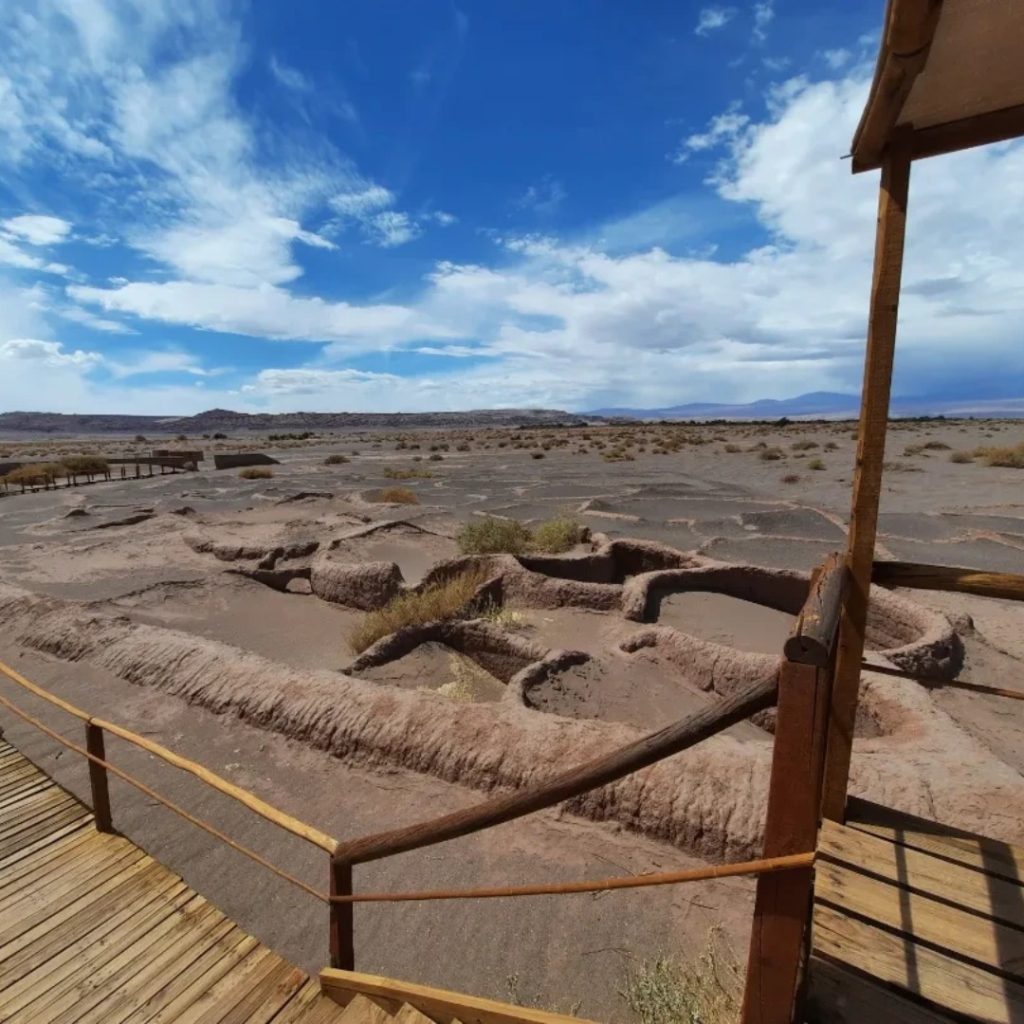
Over the centuries, the constant advance of the dunes eventually covered much of the settlement. The village remained hidden under the sand until 1956, when Jesuit priest and archaeologist Gustavo Le Paige identified structures protruding from the dunes.
Today, the conservation of the site remains a challenge. Wind, summer rains, and salts present in the soil permanently threaten these fragile mud constructions.
How to Visit Tulor Village from San Pedro de Atacama?
Getting to Tulor Village is easy. It is located just 10 kilometers southwest of San Pedro de Atacama, on the road to Valle de la Luna. The journey takes between 15 and 20 minutes by vehicle.
These are the main ways to get there:
- Private car or taxi: From San Pedro de Atacama, take Route 23 towards Valle de la Luna. Shortly before reaching the latter, you will find a signposted detour to the Coyo sector and Tulor Village.
- Bicycle: This is one of the favorite options among travelers. The route is mostly flat and crosses the Atacama oasis and dune areas. The journey takes between 30 and 45 minutes. It is recommended to do it early to avoid the high desert temperatures.
- Organized tour: Many local agencies include Tulor Village within cultural circuits along with other nearby attractions, such as Pukará de Quitor and Valle de la Luna. For a safe and responsible experience, it is recommended to hire tourist services registered with Sernatur.
Is it mandatory to take a tour to visit Tulor Village?
No. Visiting Tulor Village can be done independently, and hiring a tour is not mandatory. The site is managed by the local community and features a small interpretive museum, reconstructions of ancestral dwellings, and walkways that allow observation of the archaeological remains.
However, visiting with a local guide can enrich the experience, as it allows for a better understanding of the history, worldview, and traditions of the Atacameño communities.
Useful Information for Your Visit
Due to the intense solar radiation of the Atacama Desert, it is recommended to visit Tulor Village during the morning and bring plenty of water, sunscreen, and a hat.
- Visit duration: between 45 minutes and 1 hour.
- Entrance fee: CLP $5,000 for foreign visitors (about USD $5).
- Do not touch or remove archaeological remains. Protecting this heritage is everyone’s responsibility.