Discover Chile’s national parks in a different way, through their colorful and otherworldly settings.
Touring Chile’s National Parks should be one of the most entertaining ways to travel through our country, but it can be even more incredible if we visit landscapes that embody our favorite colors.
Fortunately, Chile has landscapes full of colors from north to south. From the intense pink of the Flowering Desert to the dark volcanic sands of Conguillío National Park, which contrasts with its evergreen forests full of ancient araucaria trees.
Show with your cell phone camera that you are an artist and make the most of these colors and the canvas that Chile offers. Remember to purchase your admission ticket to any National Park here beforehand.
Pink – Desierto Florido National Park (northern Chile)
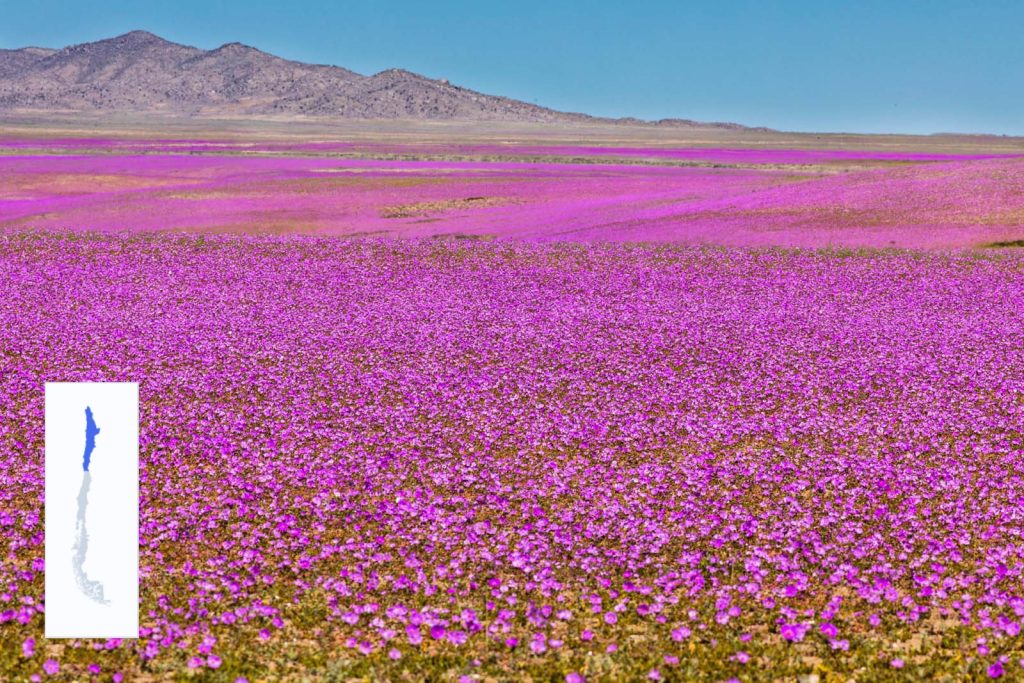
Pink is the color that transforms the impossible into reality in the Flowering Desert.
During rainy years, the aridity of the Atacama Desert becomes a living canvas thanks to the explosion of guanaco paws and añañucas, flowers that dye the pampas in soft pink tones.
The pink here symbolizes fragility and fleeting beauty, a reminder that even in the most extreme places life can flourish with dazzling force.
Location of the Flowering Desert
Yellow – Río Clarillo National Park (central Chile)
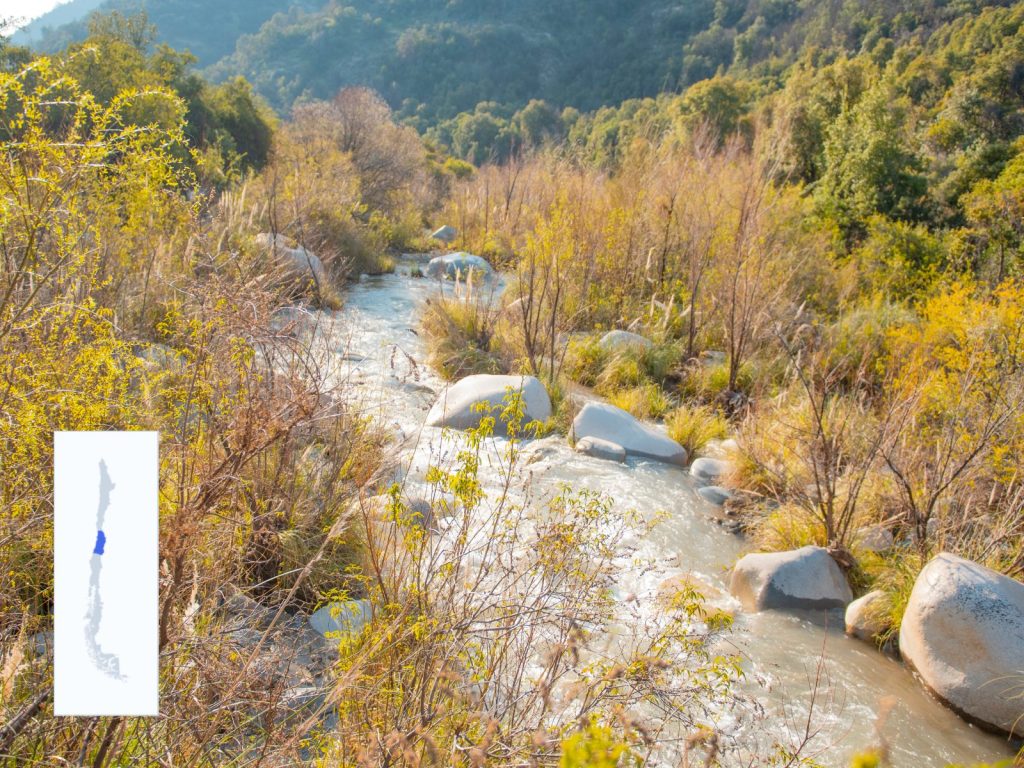
In the heart of the Cajón del Río Clarillo, this national park, just 45 kilometers southeast of Santiago, stands out for its golden and yellowish tones during the summer, when the sun illuminates the Mediterranean scrub and grasslands, and the crystalline water of the river reflects warm sparkles that seem like brushstrokes of light.
Here, yellow is not just a color, it is a symbol of light, energy and summer warmth: when the central climate dries its greenery, wild flowers and Mediterranean scrub, composed of species such as peumos, quillayes and litres, are transformed under the sun, painting ravines and paths with a unique warm palette in the area.
Unlike the more humid forests of the south, Río Clarillo offers a Mediterranean nature experience with marked contrasts between the golden areas of the scrub and the fresher and more shaded riparian areas by the riverbed.
Location of Río Clarillo National Park:
Black – Conguillío National Park (southern Chile)
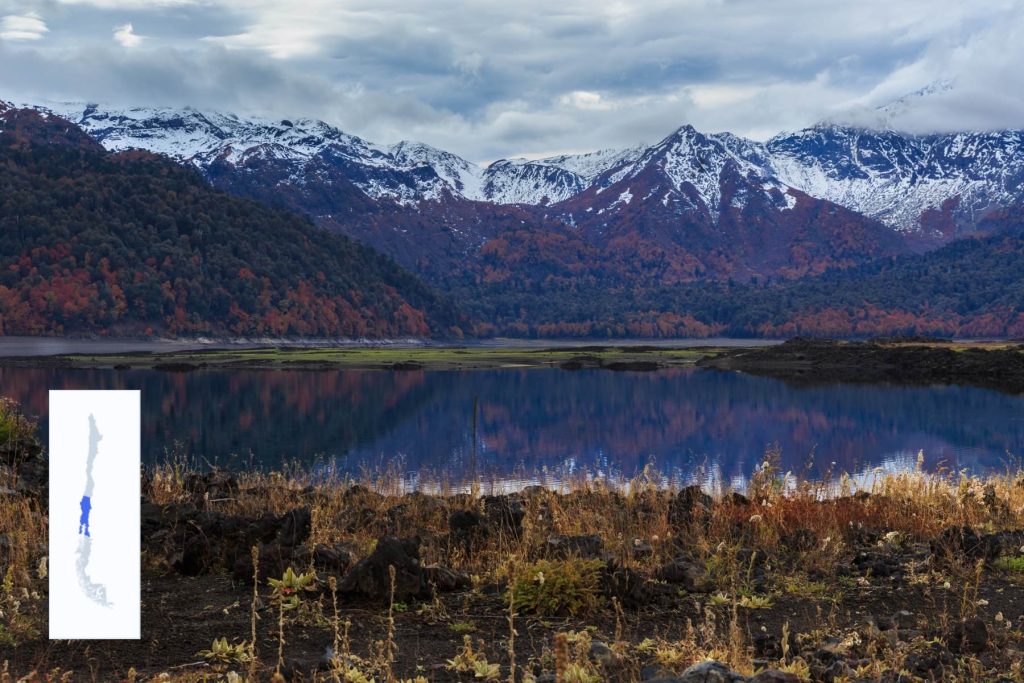
The color black becomes the protagonist in Conguillío National Park thanks to the Llaima volcano, one of the most active in South America.
Over the years, its eruptions have left extensive fields of solidified lava and volcanic sands that cover entire valleys, giving the landscape a dramatic and unique character.
The black of the volcanic earth contrasts with the bright green of the ancient araucarias, creating a scene that seems taken from another planet. Here, color not only represents the force of geology, but also the ability of life to be reborn on the ashes.
Location of Conguillío National Park:
Green – Alerce Costero National Park (southern Chile)
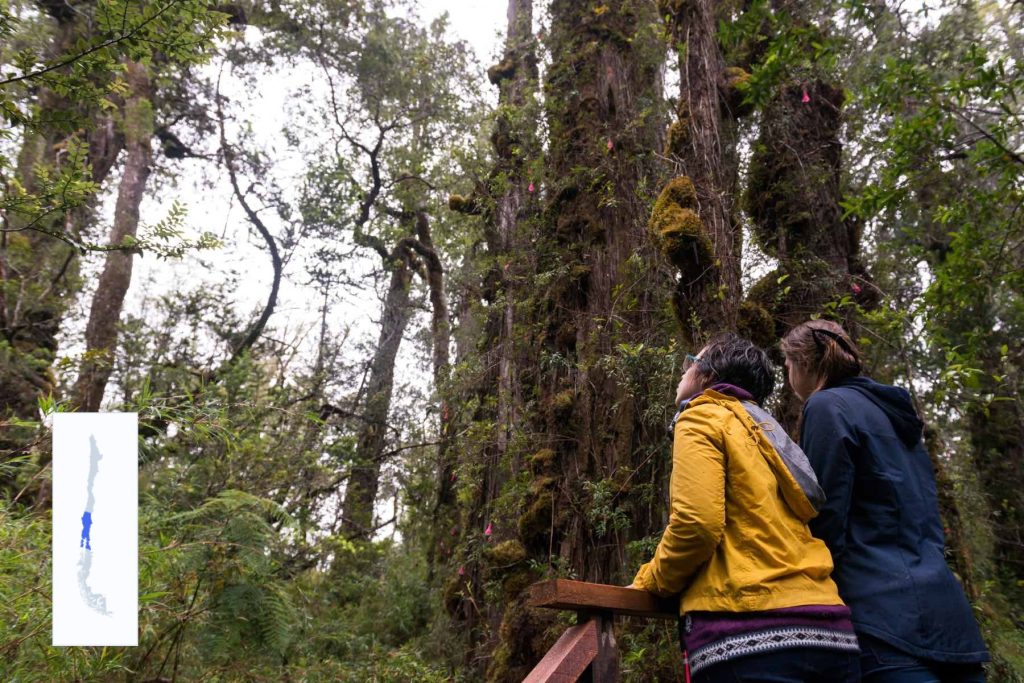
In this park, green is eternal, deep and solemn. The forests of ancient alerce trees, some like the Great-Grandfather with more than 3,500 years of life, form a natural cathedral of green tones that change with the light of day.
Mosses, ferns and lichens cover the ground and trunks, reinforcing the sensation of walking through a living sanctuary. The green here is not just a color, it is a symbol of resilience and longevity, a reminder of the vital role that forests play in the life of the planet.
Location of Alerce Costero National Park:
Turquoise – Torres del Paine National Park (Patagonia, southern zone)
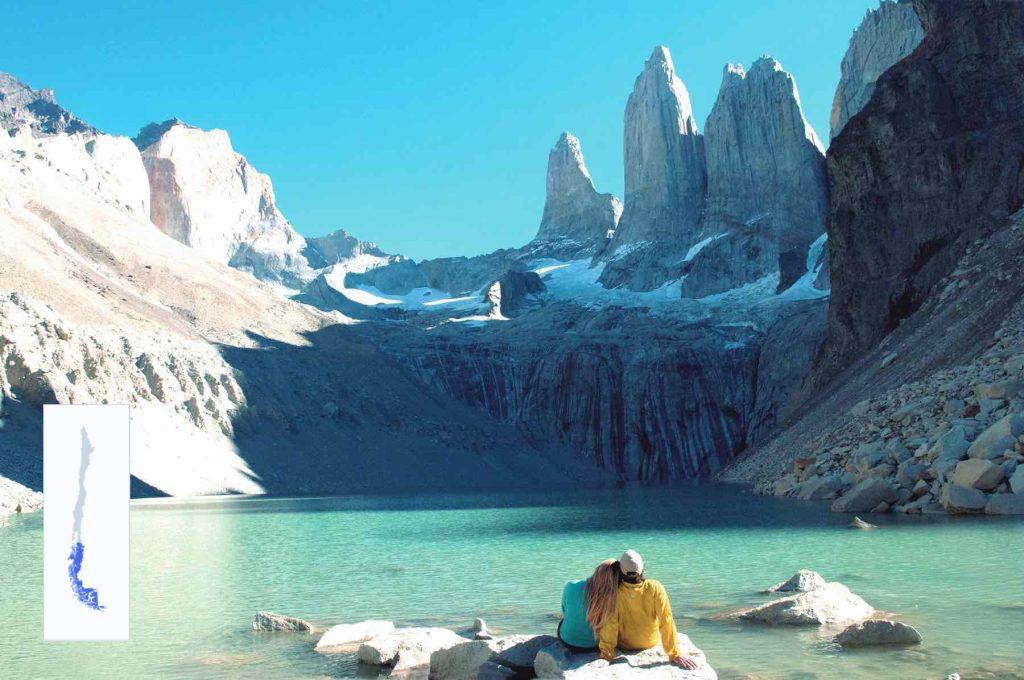
Turquoise is the unmistakable hallmark of Torres del Paine. The glacial lakes such as Nordenskjöld and Pehoé, fed by ancient ice, show waters of an intense turquoise that seem to be illuminated from within.
The contrast with the granite giants and white glaciers creates an iconic image that has traveled the world.
This color evokes purity, energy and mystery, since its tonality is due to particles of rock in suspension, the result of the slow wear of the glaciers. Turquoise is also a liquid mirror that reflects the wild grandeur of Chilean Patagonia.