



3 days to discover Chiloé’s secret churches
Updated on 14 de August, 2026

Discover Chiloé’s architecture and traditions
3 DAYS
Check out this three-day itinerary around Chiloé’s Isla Grande and its nearby islands. Along the way, you’ll visit 10 churches and chapels that reflect the distinctive religious architecture developed in this archipelago in southern Chile. Although these temples are not part of the 16 Churches of Chiloé declared a UNESCO World Heritage Site, they preserve unique features of the so-called Chilote School of Religious Wooden Architecture. During the route, you’ll discover how European building traditions adapted to the islands’ materials, climate, and geography.
This trip is part of the Ruta Patrimonial Archipiélago de Chiloé, from the Ministry of National Assets, which you can find in more detail here.
SEASON
ATTRACTIONS
ACTIVITIES
Inicio del itinerario
Attractions included on this day
Day 1
From Caulín to Quinchao: traditional architecture by the sea
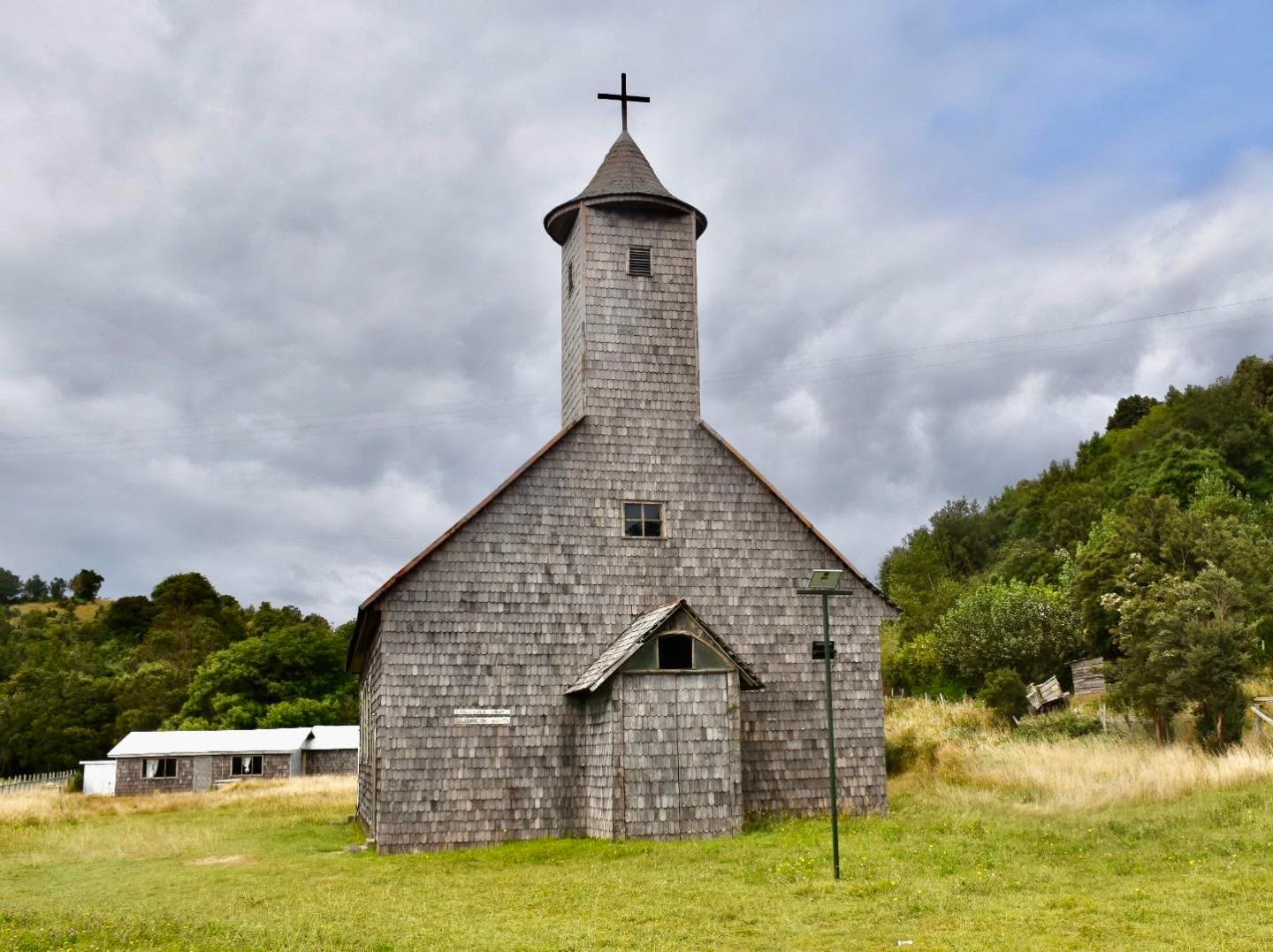
Start your journey by taking the ferry from the mainland to Chacao, the gateway to Chiloé’s Isla Grande. From there, drive north to Caulín, where you’ll visit the San José Chapel. It’s a fascinating place, with wooden shingle cladding and a chiflonera that reflect how Chilote architecture adapted to the archipelago’s rainy, windy climate.
Continue 77 km to Quicaví, opposite the Chauques Islands, to discover the San Pedro Chapel and its distinctive rear roof, known for its “duck tail” shape. Then drive 30 km to Quetalco and visit the Our Lady of Carmen Chapel, noted for its wooden shingles and stone foundations.
Finally, return to Dalcahue and take the ferry to Quinchao Island. From there, continue 34 km to Huyar Alto to visit the Our Lady of Lourdes Chapel, built in 1985 and an heir to the tradition of the Chilote School of Religious Wooden Architecture.
Photo: @unalmachilote
Attractions included on this day
Day 1
From Caulín to Quinchao: traditional architecture by the sea
Start your journey by taking the ferry from the mainland to Chacao, the gateway to Chiloé’s Isla Grande. From there, drive north to Caulín, where you’ll visit the San José Chapel. It’s a fascinating place, with wooden shingle cladding and a chiflonera that reflect how Chilote architecture adapted to the archipelago’s rainy, windy climate.
Continue 77 km to Quicaví, opposite the Chauques Islands, to discover the San Pedro Chapel and its distinctive rear roof, known for its “duck tail” shape. Then drive 30 km to Quetalco and visit the Our Lady of Carmen Chapel, noted for its wooden shingles and stone foundations.
Finally, return to Dalcahue and take the ferry to Quinchao Island. From there, continue 34 km to Huyar Alto to visit the Our Lady of Lourdes Chapel, built in 1985 and an heir to the tradition of the Chilote School of Religious Wooden Architecture.
Photo: @unalmachilote
Attractions included on this day
Day 2
Chapels, islands, and seaside landscapes
Pick up your route again in Huyar Alto and drive 34 km to Matao, at the southern tip of Quinchao Island. Facing the beach you’ll find the Our Lady of Amparo Chapel, where you can see the diagonal braces that reinforce its structure against wind and earthquakes.
Then take the ferry back to Isla Grande and continue 50 km to Llau Llao, north of Castro. There you’ll visit the Our Lady of Lourdes Chapel. Although it’s believed to have been built in 1883, the site is linked to the history of the Jesuit missions in Chiloé, present in the archipelago since the 17th century.
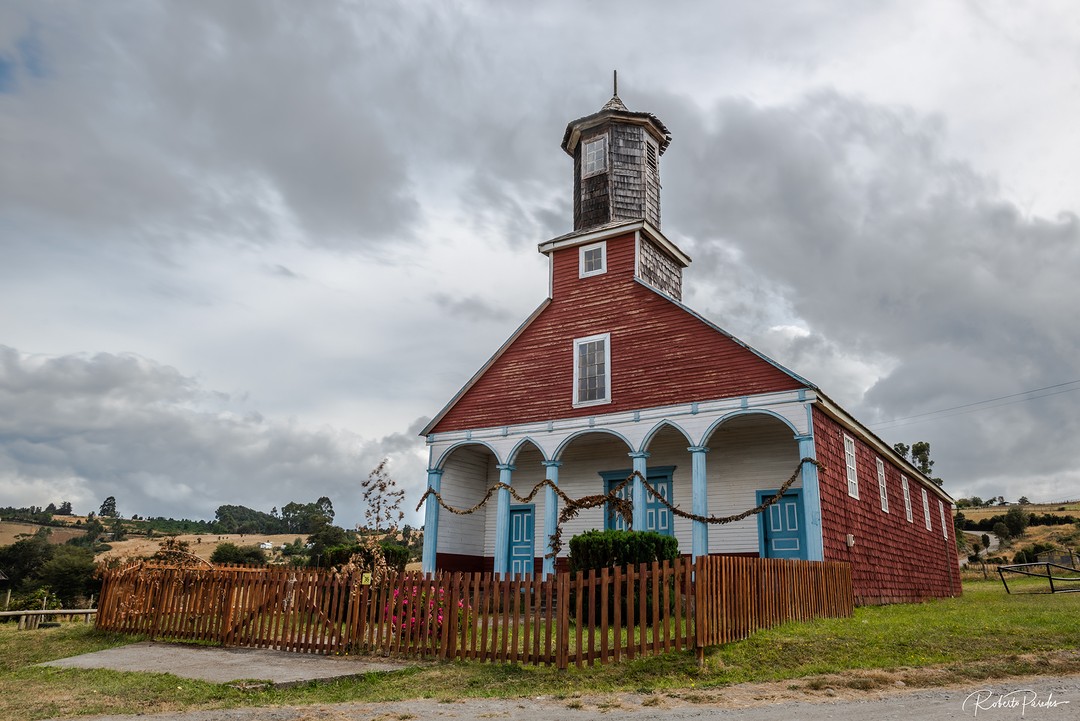
Next, drive 45 km to Puchilco, on Lemuy Island, to visit the Virgin of Candelaria Chapel. Built in 1854 through a minga, a traditional form of community work typical of Chiloé, it stands out for its colors and its integration with the landscape.
End the day in Terao, 49 km from Puchilco. Facing the Yal Channel, you’ll visit the Our Lady of Candelaria Chapel and its traditional Chilote cemetery.
Attractions included on this day
Day 2
Chapels, islands, and seaside landscapes
Pick up your route again in Huyar Alto and drive 34 km to Matao, at the southern tip of Quinchao Island. Facing the beach you’ll find the Our Lady of Amparo Chapel, where you can see the diagonal braces that reinforce its structure against wind and earthquakes.
Then take the ferry back to Isla Grande and continue 50 km to Llau Llao, north of Castro. There you’ll visit the Our Lady of Lourdes Chapel. Although it’s believed to have been built in 1883, the site is linked to the history of the Jesuit missions in Chiloé, present in the archipelago since the 17th century.
Next, drive 45 km to Puchilco, on Lemuy Island, to visit the Virgin of Candelaria Chapel. Built in 1854 through a minga, a traditional form of community work typical of Chiloé, it stands out for its colors and its integration with the landscape.
End the day in Terao, 49 km from Puchilco. Facing the Yal Channel, you’ll visit the Our Lady of Candelaria Chapel and its traditional Chilote cemetery.
Attractions included on this day
Day 3
Huilliche memory and Chiloé traditions
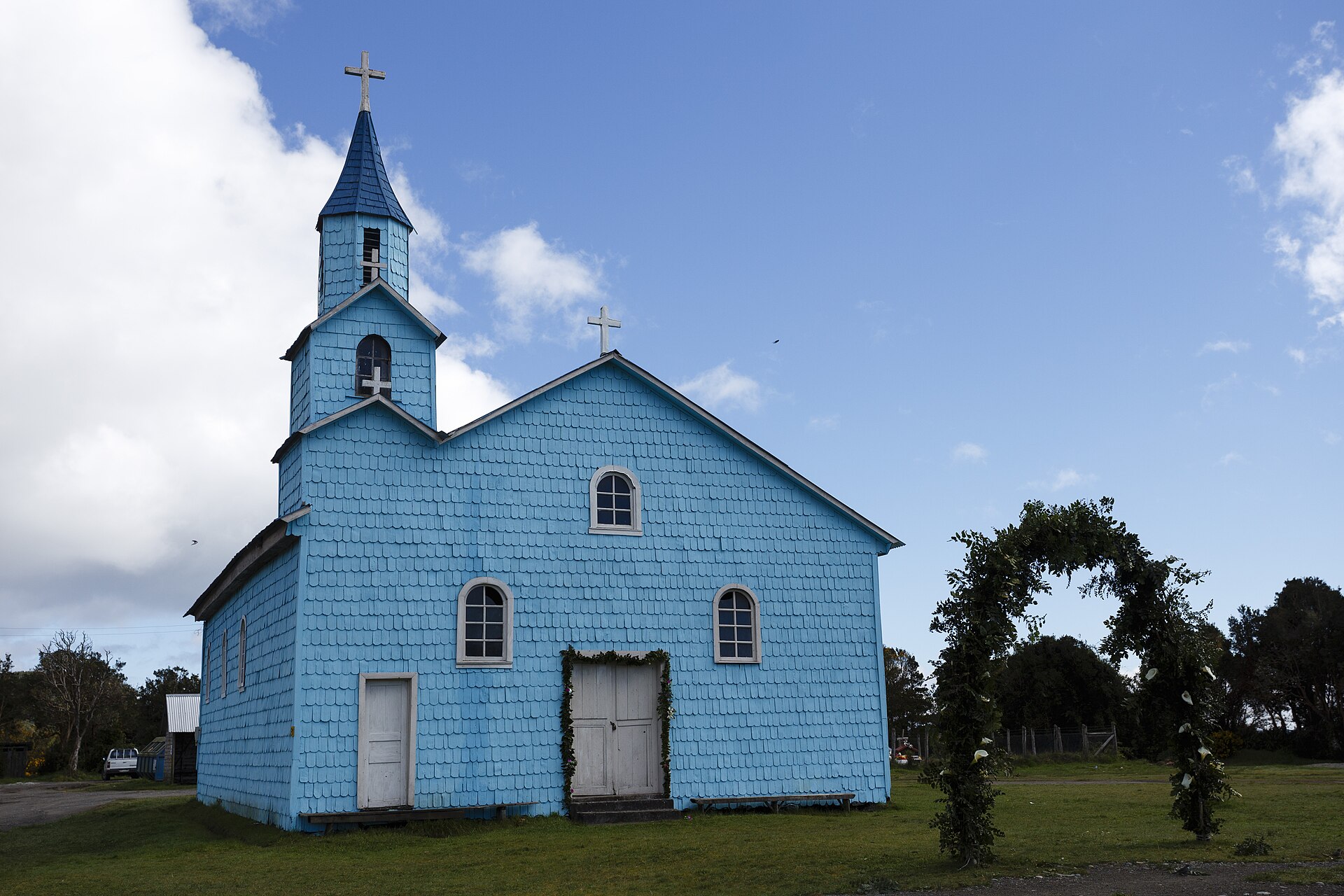
Pick up your route again in Terao and travel 38 km to Lelbun, a village known for its beaches and its tradition as a coastal destination. There you’ll find the Our Lady of Patronage Chapel, recognizable by its sky-blue color and an architectural feature: its tower is located on the right side of the façade.
To finish the route, continue 38 km to Compu and visit the Our Lady of Carmen Chapel. This place reflects the meeting of Catholic tradition and the worldview of the Huilliche people, one of the Indigenous peoples of southern Chile.
If you visit the village during the Our Lady of Carmen Festival in mid-July, you can experience a celebration accompanied by traditional instruments such as the trutruka and the kultrún.
This is where your route through Chiloé’s secret churches ends. To round out the experience, enjoy the local cuisine, shaped by seafood, potatoes, and other ingredients tied to the relationship between communities and the land.
Attractions included on this day
Day 3
Huilliche memory and Chiloé traditions
Pick up your route again in Terao and travel 38 km to Lelbun, a village known for its beaches and its tradition as a coastal destination. There you’ll find the Our Lady of Patronage Chapel, recognizable by its sky-blue color and an architectural feature: its tower is located on the right side of the façade.
To finish the route, continue 38 km to Compu and visit the Our Lady of Carmen Chapel. This place reflects the meeting of Catholic tradition and the worldview of the Huilliche people, one of the Indigenous peoples of southern Chile.
If you visit the village during the Our Lady of Carmen Festival in mid-July, you can experience a celebration accompanied by traditional instruments such as the trutruka and the kultrún.
This is where your route through Chiloé’s secret churches ends. To round out the experience, enjoy the local cuisine, shaped by seafood, potatoes, and other ingredients tied to the relationship between communities and the land.
What you should know
How to get there by air
You can fly from Santiago to Puerto Montt’s El Tepual Airport (PMC) and continue overland to Chiloé. Another option is to fly directly to Castro’s Mocopulli Airport (MHC), located on Chiloé’s Isla Grande.
If you arrive in Puerto Montt, drive to Pargua and take the ferry to Chacao, the gateway to Chiloé. From Castro, you can start your island route directly.
How to get there by land
To do this route, renting a vehicle is recommended, as the chapels are located in different towns and rural areas. The itinerary includes several ferry crossings, so it’s important to check schedules and plan travel times in advance.
Climate and clothing
Chiloé has a temperate rainy climate, with precipitation for much of the year. Bring waterproof clothing, comfortable footwear, and layers you can add or remove. Sun protection is also recommended, as conditions can change quickly.


