



Heritage Route: Chiloé’s UNESCO Churches in 3 Days
LANDSCAPES:
VALLEYS AND TOWNS
Updated on 14 de August, 2026

The mixed-heritage legacy of island architecture
3 DAYS
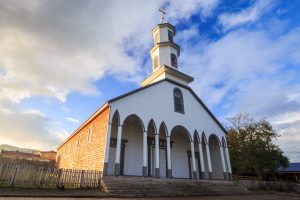
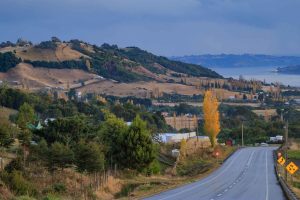
The UNESCO Churches of Chiloé circuit lets you discover one of the most extraordinary cultural legacies in southern Chile. Travel through the towns of Tenaún, Dalcahue, Castro and Chonchi, where nine temples declared UNESCO World Heritage Sites are preserved. Between coastal landscapes, channels, and hills, you’ll discover the tradition of Chilote carpenters, whose craftsmanship gave rise to a wooden architecture unique in the world.
This trip is part of the Chiloé Archipelago Heritage Route by the Ministry of National Assets, which you can find in more detail here.
SEASON
ATTRACTIONS
ACTIVITIES
Inicio del itinerario
Attractions included on this day
Day 1
From Colo to Dalcahue: the origins of the Chilote School
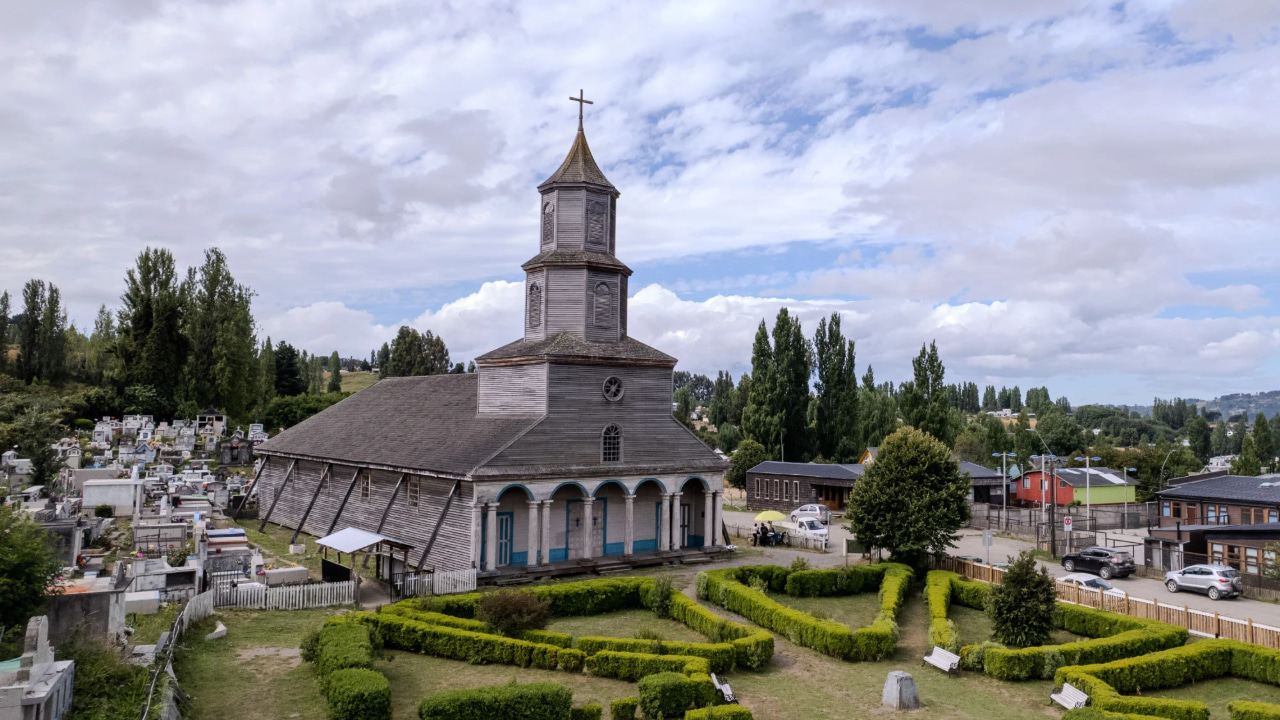
Your first stop will be the village of Colo, located 70 km from Castro, the capital of Chiloé. This is where you’ll find the San Antonio Church of Colo, one of the temples that best preserves the features of the archipelago’s traditional religious architecture.
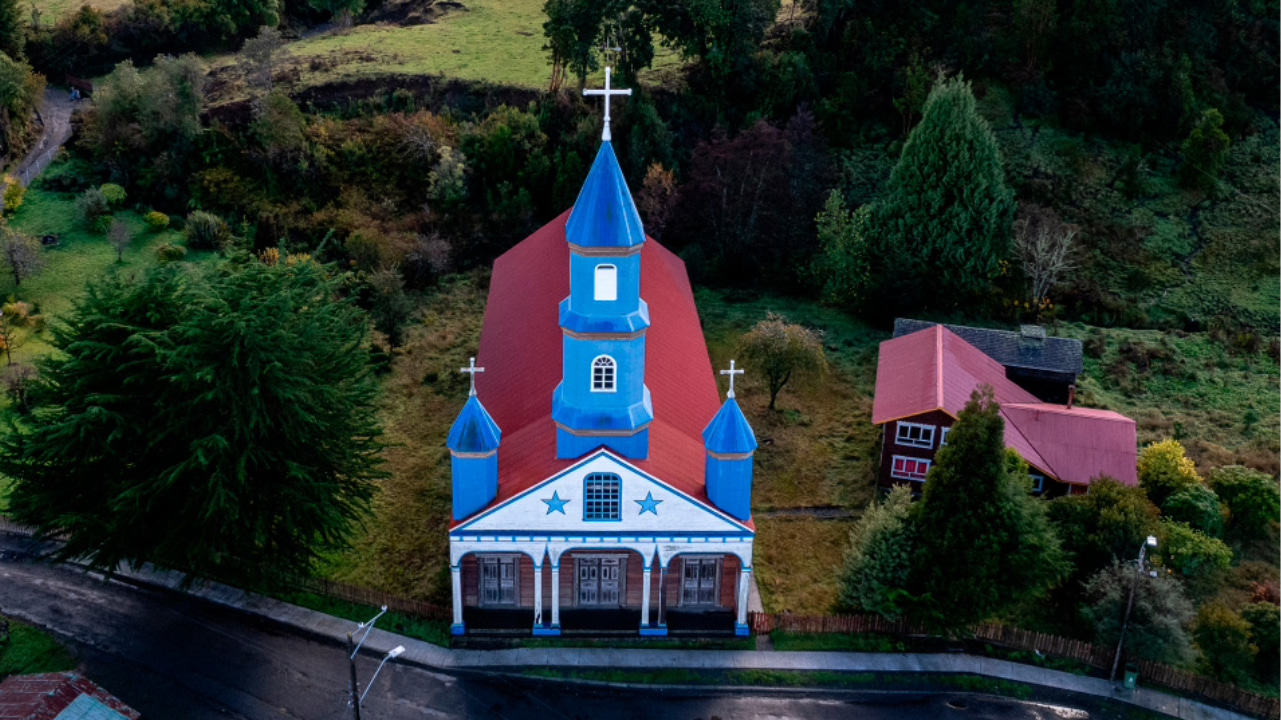
Continue 13 km to Tenaún, where you’ll find one of the most striking churches on the route. From the main square, you can see how the temple faces both the sea and the community, reflecting the relationship between Chilote life and navigation.
The route continues 18 km to San Juan, where the church sits beside a sheltered bay. Inside, the white walls stand out, along with the red-and-black ornamentation and the traditional wooden gate that protects the entrance to the temple.
Finally, continue about 25 km southwest to reach Dalcahue and visit its Our Lady of Sorrows Church, which preserves the Chilote neoclassical style. While you’re there, be sure to visit the Craft Market, with wool handicrafts you won’t find anywhere else.
Photo: Tenaún / Fundación Iglesias Patrimoniales de Chiloé
Attractions included on this day
Day 1
From Colo to Dalcahue: the origins of the Chilote School
Your first stop will be the village of Colo, located 70 km from Castro, the capital of Chiloé. This is where you’ll find the San Antonio Church of Colo, one of the temples that best preserves the features of the archipelago’s traditional religious architecture.
Continue 13 km to Tenaún, where you’ll find one of the most striking churches on the route. From the main square, you can see how the temple faces both the sea and the community, reflecting the relationship between Chilote life and navigation.
The route continues 18 km to San Juan, where the church sits beside a sheltered bay. Inside, the white walls stand out, along with the red-and-black ornamentation and the traditional wooden gate that protects the entrance to the temple.
Finally, continue about 25 km southwest to reach Dalcahue and visit its Our Lady of Sorrows Church, which preserves the Chilote neoclassical style. While you’re there, be sure to visit the Craft Market, with wool handicrafts you won’t find anywhere else.
Photo: Tenaún / Fundación Iglesias Patrimoniales de Chiloé
Attractions included on this day
Day 2
Rilán, Castro and Nercón: Chiloé’s heritage heart
Day two starts in Rilán, a quiet peninsula northeast of Castro. Here you’ll visit Santa María Church, known for its telescopic tower and its wooden roof with a latticework reminiscent of old European Gothic churches.
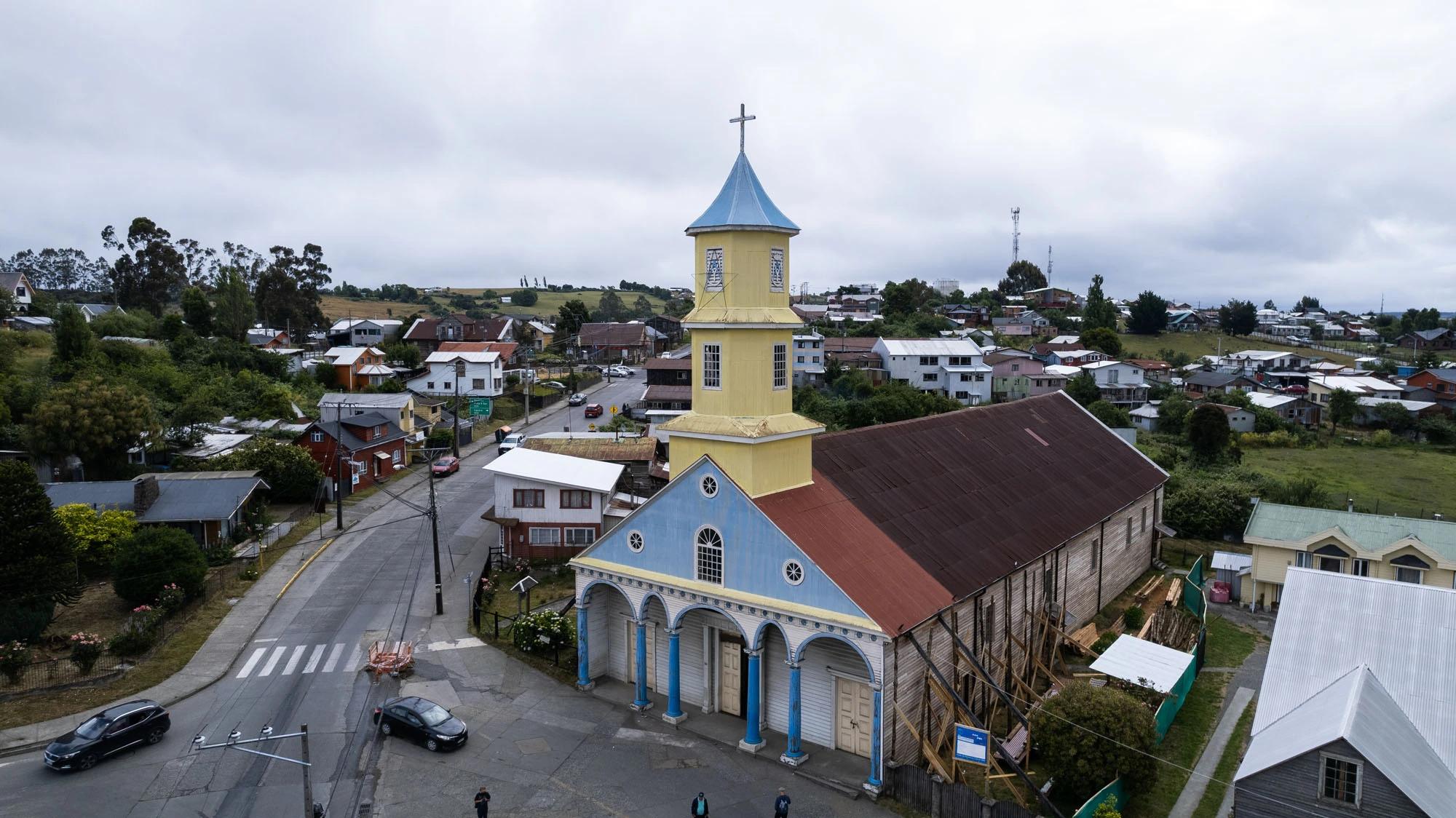
Then head to Castro, where you’ll find San Francisco Church, one of Chiloé’s most iconic postcard views. Built in the early 20th century with native woods, it’s one of the most photographed monuments in southern Chile.
Continue on to Nercón, located about 5 km from Castro, to discover Our Lady of Grace Church, built entirely of wood using complex joinery systems, without metal nails.
Photo: Castro / Churches of Chiloé
Attractions included on this day
Day 2
Rilán, Castro and Nercón: Chiloé’s heritage heart
Day two starts in Rilán, a quiet peninsula northeast of Castro. Here you’ll visit Santa María Church, known for its telescopic tower and its wooden roof with a latticework reminiscent of old European Gothic churches.
Then head to Castro, where you’ll find San Francisco Church, one of Chiloé’s most iconic postcard views. Built in the early 20th century with native woods, it’s one of the most photographed monuments in southern Chile.
Continue on to Nercón, located about 5 km from Castro, to discover Our Lady of Grace Church, built entirely of wood using complex joinery systems, without metal nails.
Photo: Castro / Churches of Chiloé
Attractions included on this day
Day 3
Chonchi and Vilupulli: tradition by the sea
On the final day, you’ll visit churches closely linked to Chiloé’s maritime history. First, travel to Vilupulli, 15 km from Castro, home to San Antonio de Padua Church, with the tallest and most slender tower in the archipelago.
This temple was built through a minga chilota, a traditional form of community work in which neighbors and families come together to build or move a structure. Inside, the Seated Virgin stands out as one of the most popular pieces of our time.
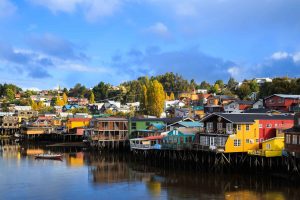
Finally, your route ends with a 7 km trip to Chonchi, known as the “City of Three Tiers” for its streets that descend in terraces toward the sea. Its church surprises visitors with the spaciousness of its star-vaulted ceiling.
This concludes the Chiloé Churches Circuit! We invite you to explore the three remaining circuits that are part of this wonderful National Assets Ministry Heritage Route: Historic Circuit; Living Heritage Circuit; and Chiloé Island Circuit at the following link.
Photo: Our Lady of the Rosary – Fundación Iglesias Patrimoniales de Chiloé
Attractions included on this day
Day 3
Chonchi and Vilupulli: tradition by the sea
On the final day, you’ll visit churches closely linked to Chiloé’s maritime history. First, travel to Vilupulli, 15 km from Castro, home to San Antonio de Padua Church, with the tallest and most slender tower in the archipelago.
This temple was built through a minga chilota, a traditional form of community work in which neighbors and families come together to build or move a structure. Inside, the Seated Virgin stands out as one of the most popular pieces of our time.
Finally, your route ends with a 7 km trip to Chonchi, known as the “City of Three Tiers” for its streets that descend in terraces toward the sea. Its church surprises visitors with the spaciousness of its star-vaulted ceiling.
This concludes the Chiloé Churches Circuit! We invite you to explore the three remaining circuits that are part of this wonderful National Assets Ministry Heritage Route: Historic Circuit; Living Heritage Circuit; and Chiloé Island Circuit at the following link.
Photo: Our Lady of the Rosary – Fundación Iglesias Patrimoniales de Chiloé
What you should know
How to get there by air
You can fly from Santiago (SCL) to Mocopulli Airport (MHC), located between Castro and Dalcahue. Another option is to fly to El Tepual Airport (PMC) in Puerto Montt, then continue overland to Chiloé.
If you travel to El Tepual, you’ll need to continue along Route 5 South to Pargua and cross the Chacao Channel by ferry to enter the Isla Grande de Chiloé.
How to get there by land
Access the island by crossing the Chacao Channel by ferry from Pargua. To get around, Route 5 connects Ancud, Castro and Chonchi, while secondary roads take you to the villages where several churches are located, and local buses and colectivos link the rural towns where the churches are found.
Although there is public transportation between the urban centers, renting a car or arranging transfers makes it easier to explore the secondary roads.
Climate and clothing
Chiloé has a temperate rainy climate for much of the year. Bring waterproof clothing, comfortable shoes with good grip, and layers you can add or remove, as weather conditions can change quickly.
Must-Know Tips
Check church opening hours before your visit, as several are still active religious spaces. Visit the temples respectfully toward local communities, and allow enough time to enjoy each village and its landscapes at a relaxed pace.


