



Heritage Route: Hanga Roa Walking Tour
Updated on 11 de September, 2026

The capital of Rapa Nui
1 DAY
Would you like to explore Hanga Roa but don’t know where to start? Here’s your guide to the island’s main urban center and the gateway to a fascinating culture. On this journey, you’ll visit ancient ceremonial centers and see how island traditions are still alive today.
This circuit is part of the Te Ara O Rapa Nui Heritage Route: World Heritage, by the Ministry of National Assets, which you can find in more detail here.
SEASON
ATTRACTIONS
Inicio del itinerario

Attractions included on this day
Day 1
Moai, sea, and living culture
This route starts at the intersection of Atamu Tekena and Kainga Street, from where you’ll walk 8 minutes to reach the Tahai Ceremonial Center.
Facing the ocean, you’ll find its three ceremonial platforms: Vai Uri, Ahu Tahai, and Ahu Ko Te Riku, the last of which is easy to spot thanks to the moai that still has its pukao. Here you can see how the landscape and ancestral life were closely tied to the sea.
Keep walking for about five minutes to the Hanga Roa Cemetery, where Catholic traditions blend with Rapa Nui symbols and expressions. In another ten minutes, you’ll reach the Santa Cruz Church. Take a look at its distinctive architecture and the carvings that reflect this cultural meeting point.
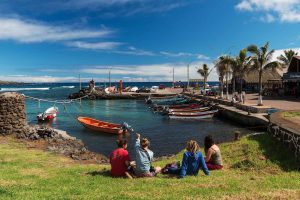
From there, walk 5 minutes toward the coast to reach Hanga Roa (Tai) Cove, where you can watch the fishermen at work and the ocean that remains a fundamental part of island life. Then, explore the Craft Market and the Agricultural and Craft Fair to get closer to contemporary expressions of local culture.
Continue your route along Pea Beach, an area for surfing and a great spot to see sea turtles that come close to the shallow rocks. Finally, end your itinerary at Hanga Piko, a bay where artisanal fishing and canoeing in Polynesian canoes are practiced.
Attractions included on this day
Day 1
Moai, sea, and living culture
This route starts at the intersection of Atamu Tekena and Kainga Street, from where you’ll walk 8 minutes to reach the Tahai Ceremonial Center.
Facing the ocean, you’ll find its three ceremonial platforms: Vai Uri, Ahu Tahai, and Ahu Ko Te Riku, the last of which is easy to spot thanks to the moai that still has its pukao. Here you can see how the landscape and ancestral life were closely tied to the sea.
Keep walking for about five minutes to the Hanga Roa Cemetery, where Catholic traditions blend with Rapa Nui symbols and expressions. In another ten minutes, you’ll reach the Santa Cruz Church. Take a look at its distinctive architecture and the carvings that reflect this cultural meeting point.
From there, walk 5 minutes toward the coast to reach Hanga Roa (Tai) Cove, where you can watch the fishermen at work and the ocean that remains a fundamental part of island life. Then, explore the Craft Market and the Agricultural and Craft Fair to get closer to contemporary expressions of local culture.
Continue your route along Pea Beach, an area for surfing and a great spot to see sea turtles that come close to the shallow rocks. Finally, end your itinerary at Hanga Piko, a bay where artisanal fishing and canoeing in Polynesian canoes are practiced.
What you should know
How to get there by air
If you’re traveling from abroad, you’ll first arrive at Arturo Merino Benítez Airport in Santiago, and from there you can take a flight to Mataveri International Airport, on Rapa Nui. Hanga Roa is right next to the airport.
How to get there by land
To get around the island, the most common option is to book a guided tour, which makes the most of your time and helps you learn more. You can also rent a car, jeep, or motorbike. Distances are short, but some routes are unpaved.
Climate and clothing
Rapa Nui has a subtropical climate, with pleasant temperatures for much of the year and rainfall that can occur in different seasons. Bring light clothing, comfortable shoes, sun protection, and a waterproof or windproof jacket for changing weather conditions.
Must-Know Tips
Respect the archaeological sites and avoid climbing onto ceremonial platforms or touching the moai. Bring water, sunscreen, a hat, and comfortable walking shoes. In places like the cemetery, remember you’re visiting a site that is sacred and funerary for the community.


