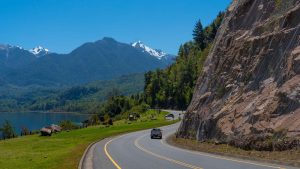
Ready for the road trip of a lifetime? The Los Ríos Region is home to the Seven Lakes Circuit, a scenic route featuring seven crystal-clear bodies of water.
This route covers the lakes Calafquén, Pullinque, Panguipulli, Neltume, Pirihueico, Pellaifa, and Riñihue. Between the Valdivian rainforest and the majestic Mocho-Choshuenco volcano, this destination combines adventure, hot springs, and the living heritage of Mapuche culture.
It’s a perfect choice for travelers looking to discover and explore one of the most spectacular landscapes in southern Chile.
1. Lake Panguipulli: Where the Route Begins
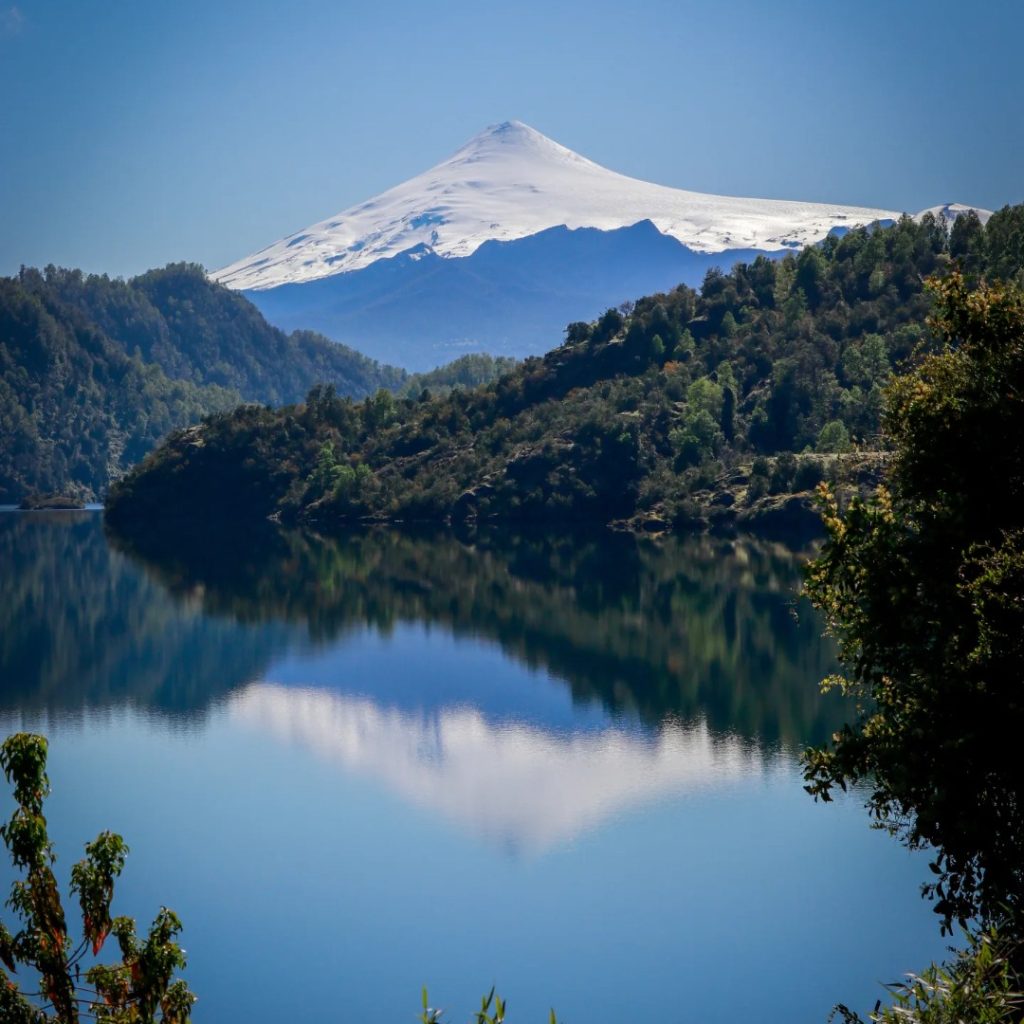
Lake Panguipulli is the largest lake on the circuit. On its shores lies Panguipulli, known for its woodworking tradition and its church built in 1947, one of the architectural landmarks of the area. From its beaches, you can enjoy views of the Villarrica volcano.
It is also a strategic starting point for the route, offering services and access to activities such as boating, recreational fishing, and canopy tours. In autumn, the surrounding forests turn red and gold, creating an ideal landscape for hiking and photography.
2. Lake Calafquén: A Resort with Warm Waters
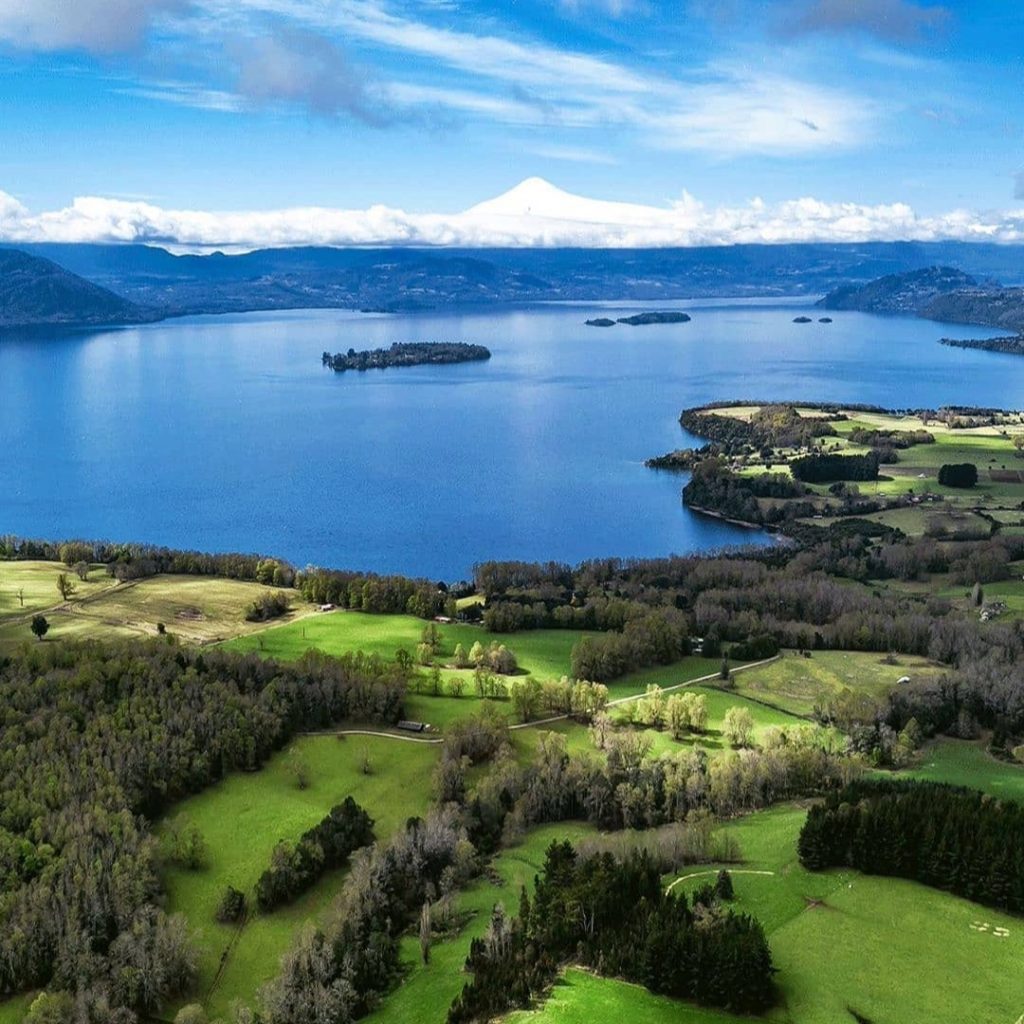
About 43 kilometers from Panguipulli, Lake Calafquén (from Mapudungun for “another lake”) is the epicenter of water sports. This body of water is home to the towns of Lican Ray (in the La Araucanía Region), Coñaripe, and Calafquén, where local crafts and Chilean-Mapuche fusion gastronomy create a unique cultural experience.
Coñaripe beach, almost 3 kilometers long, is one of the longest in the Los Ríos Region. Thanks to its excellent offering of cabins and services, it is the ideal place to enjoy swimming, yachting, and sport fishing.
3. Lake Riñihue: Deep Calm
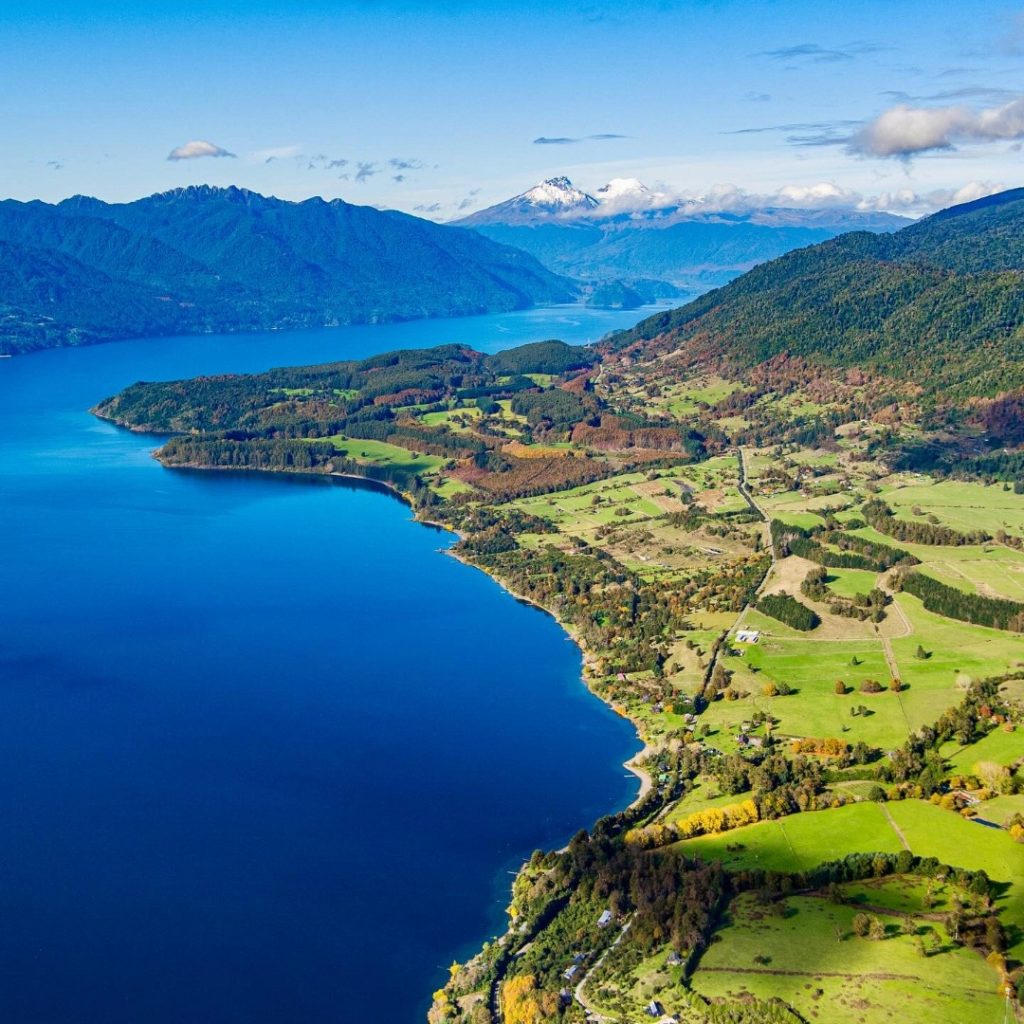
Named after Rüngi we (“place of colihues”), Lake Riñihue stands out for its serenity and glacial waters. Just 26 kilometers from Panguipulli, it is one of the quietest spots on the Seven Lakes Circuit in Chile.
At its eastern end, the Mocho-Choshuenco volcano dominates the landscape, creating an ideal setting for photography and trekking. Its waters vary between 7°C in winter and up to 20°C in summer, with gentle waves, perfect for relaxation and light water activities.
4. Lake Pellaifa and its Submerged Forest
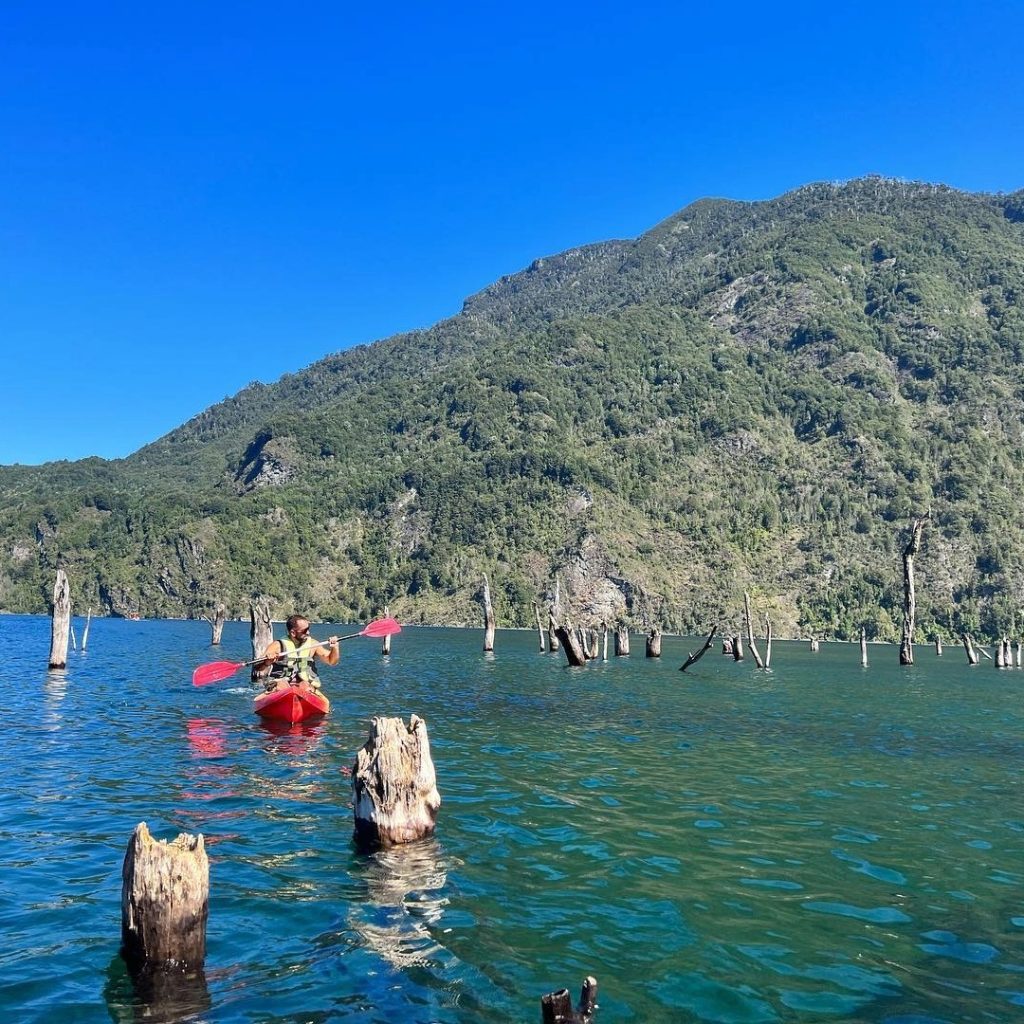
Located just 7 kilometers from Coñaripe, Lake Pellaifa (from Mapudungun Pillad: “frost”) is one of the most photogenic and breathtaking spots in southern Chile.
Surrounded by pre-Andean mountain ranges with dense vegetation, this body of water is famous for its submerged forest: tree trunks emerging from the depths after the 1960 Valdivia earthquake. Its silent atmosphere makes it a favorite place for contemplation and photography.
5. Lake Neltume: Adventure and Valdivian Rainforest
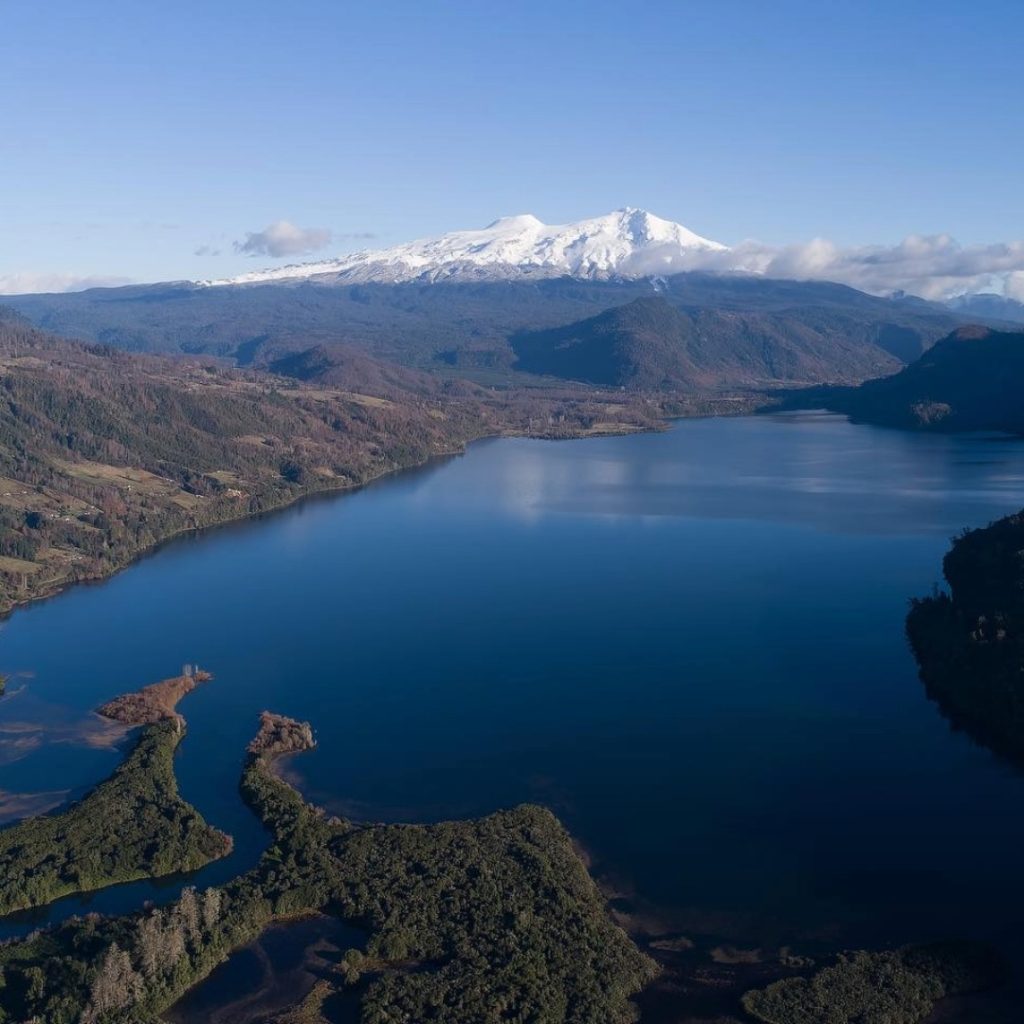
Continuing from Panguipulli along Route 203 for 55 kilometers, you’ll find Lake Neltume —from Mapudungun montulvn we (“liberated place”)—, a key spot for trekking and wildlife observation. Surrounded by native forests, it is the gateway to the Huilo Huilo Biological Reserve, just 6 kilometers away.
On its northern shore lies Neltume, a community with a logging identity that now promotes community tourism. From the town, just a 10-minute walk, you can access Neltume Park.
6. Lake Pirihueico: Boating Among Mountains
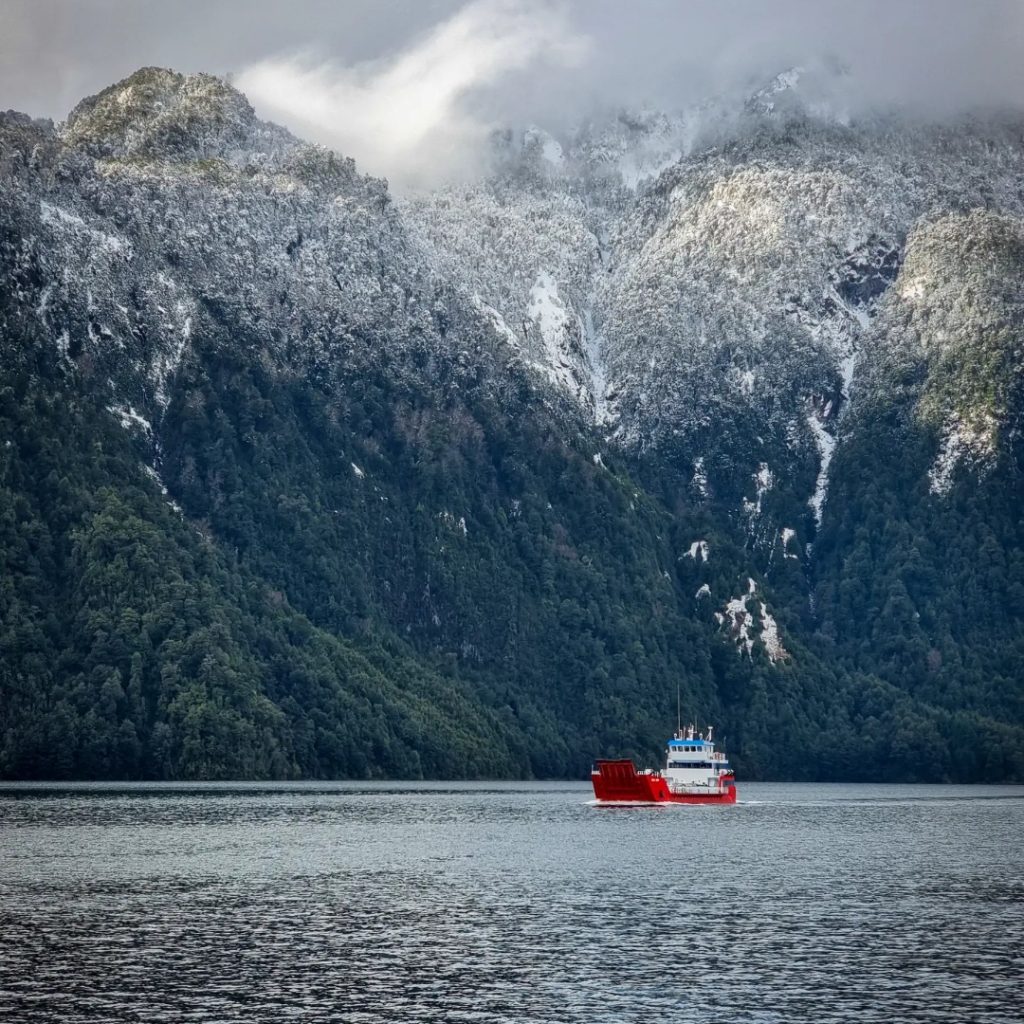
Known as “snow lagoon” (Pire-weyko), this glacial lake is 68 kilometers from Panguipulli. It is a strategic crossing: from the town of Puerto Fuy, a ferry crosses its blue-green waters towards the Hua-Hum International Pass, connecting with San Martín de los Andes, Argentina.
Nestled among high peaks and protected by the Mocho-Choshuenco volcano, it is a privileged destination for trout sport fishing, native wildlife spotting, and trekking along pristine trails.
7. Lake Pullinque: Untouched Nature on the Seven Lakes Circuit
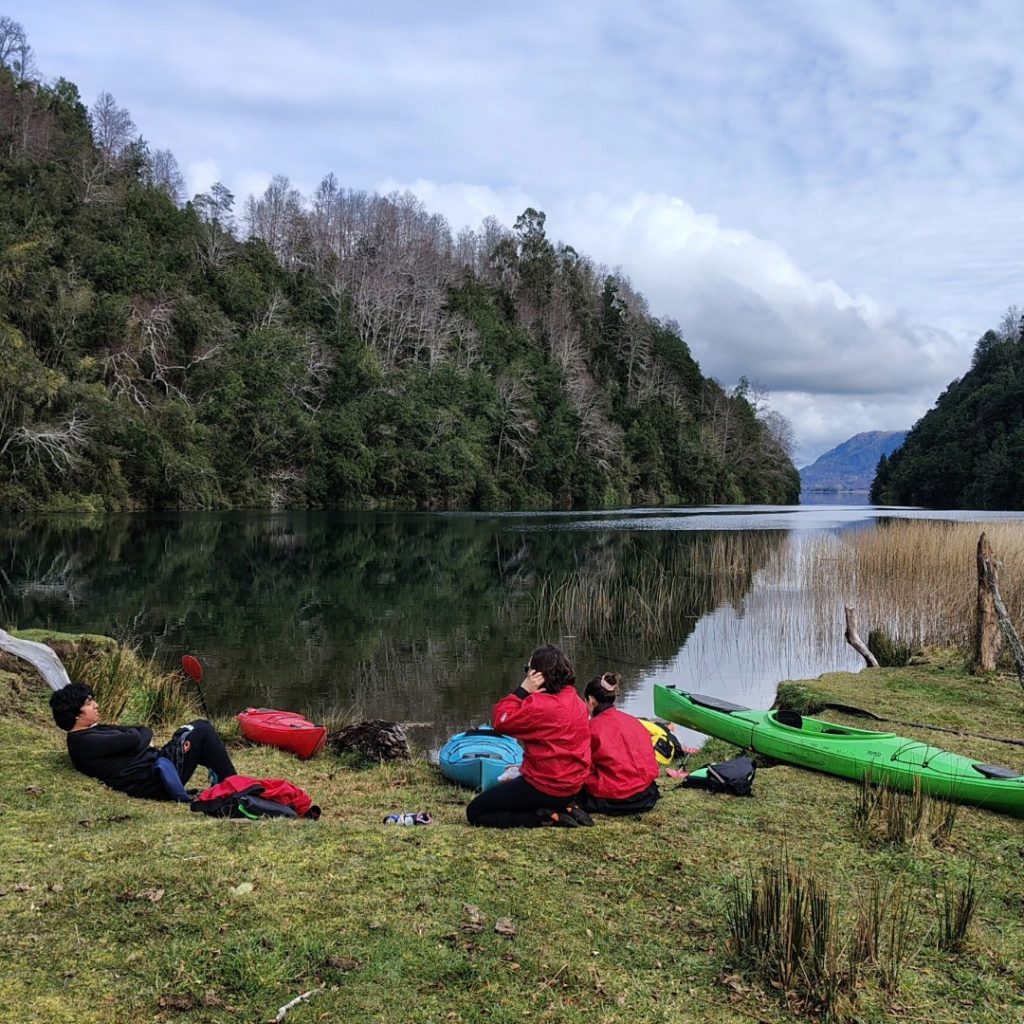
Located 20 kilometers from Panguipulli on the route to Coñaripe, Lake Pullinque —from Mapudungun pu llinke (“place of frogs”)— is one of the most intimate spots on the circuit. This body of water is one of the smallest on the journey. It is surrounded by native forests and Mapuche communities that preserve their traditions.
Without large urban centers on its shores, this area stands out for its virtually untouched nature. It is the ideal destination for birdwatching and wetlands, and also offers perfect conditions for boating, sport fishing, and kayaking.
How to Get to the Seven Lakes Circuit?
You can arrive by air via Pichoy Aerodrome in Valdivia, or La Araucanía Airport in Temuco. From Valdivia, the transfer to Panguipulli is about 80 kilometers (1 hour 30 minutes), and from Temuco, about 130 kilometers (2 hours). You can also arrive by land in a car or bus, with paved routes and access via Lanco, on a direct and scenic journey to the start of the circuit.